


Consumers around the world will be paying a lot more to heat their homes
U.S. Treasury has sanctioned Japan’s BitBank, shows Iran still making money on oil sales
Iran is still selling oil through ship-to-ship transfers to China
Global leaders are meeting at the U.N. General Assembly, and the impact of the Iran War will be front and center. There will be a list of things to watch for.
Last week I broke out the next belt-tightening event for some U.S. consumers- heating fuel.
This additional inflationary impact will be felt worldwide.
Rising fuel costs to heat homes will be a global problem, including the double whammy of paying more for fuel delivery because of soaring diesel prices.
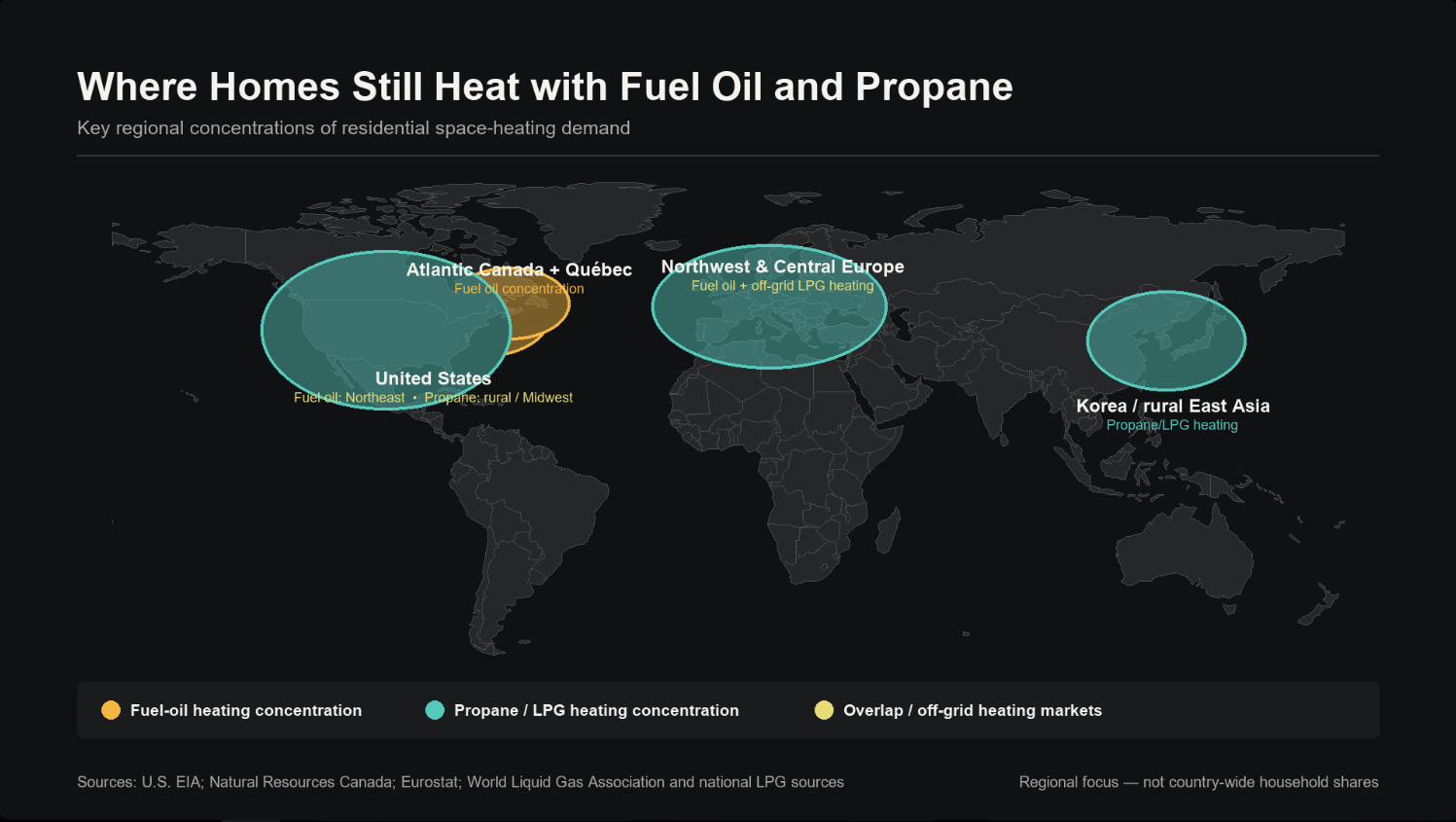
This was one of the topics I discussed with Petrie Hosken of TalkTV in Europe this Sunday morning.
The global refinery crisis is getting worse as Saudi Arabia’s oil infrastructure is attacked by the Iranian-backed Houthis. Since the first reported Saudi tanker strikes by the Houthis on July 22, the workaround for the leading source of crude out of the Middle East has been impacted.
Additional attacks have happened; the Houthis control Perim Island. While Saudi Arabia is moving quickly to repair pipelines, the country has said it will take weeks to get back up and running.
Russian oil infrastructure is still damaged by continued strikes by Ukraine. Russia has extended its diesel export ban through October 31 so it can stabilize domestic supplies and rebuild reserves ahead of winter.
Data proves the Middle East refinery damage is greater than Russia’s. According to energy data, Middle East refinery output fell roughly 27% in Q2 2026 to around 6.5 million bpd. The Ukrainian strikes on Russia’s diesel-producing refineries have knocked out around 25% capacity, according to reports.
This trade at rest is widening the hole in the global energy bucket.
No matter what Secretary of Defense Pete Hegseth says, the United States needs the Strait of Hormuz open because the U.S. West Coast and East Coast buy crude on the open market.
The 56 Jones Act vessels are fully employed, moving goods, and according to MARAD (U.S. Maritime Administration), 257 voyages by 200 Jones Act-waived vessels have been completed and are ongoing.
But this is NOT enough. U.S. refineries are at full capacity. Additional fuel is needed.
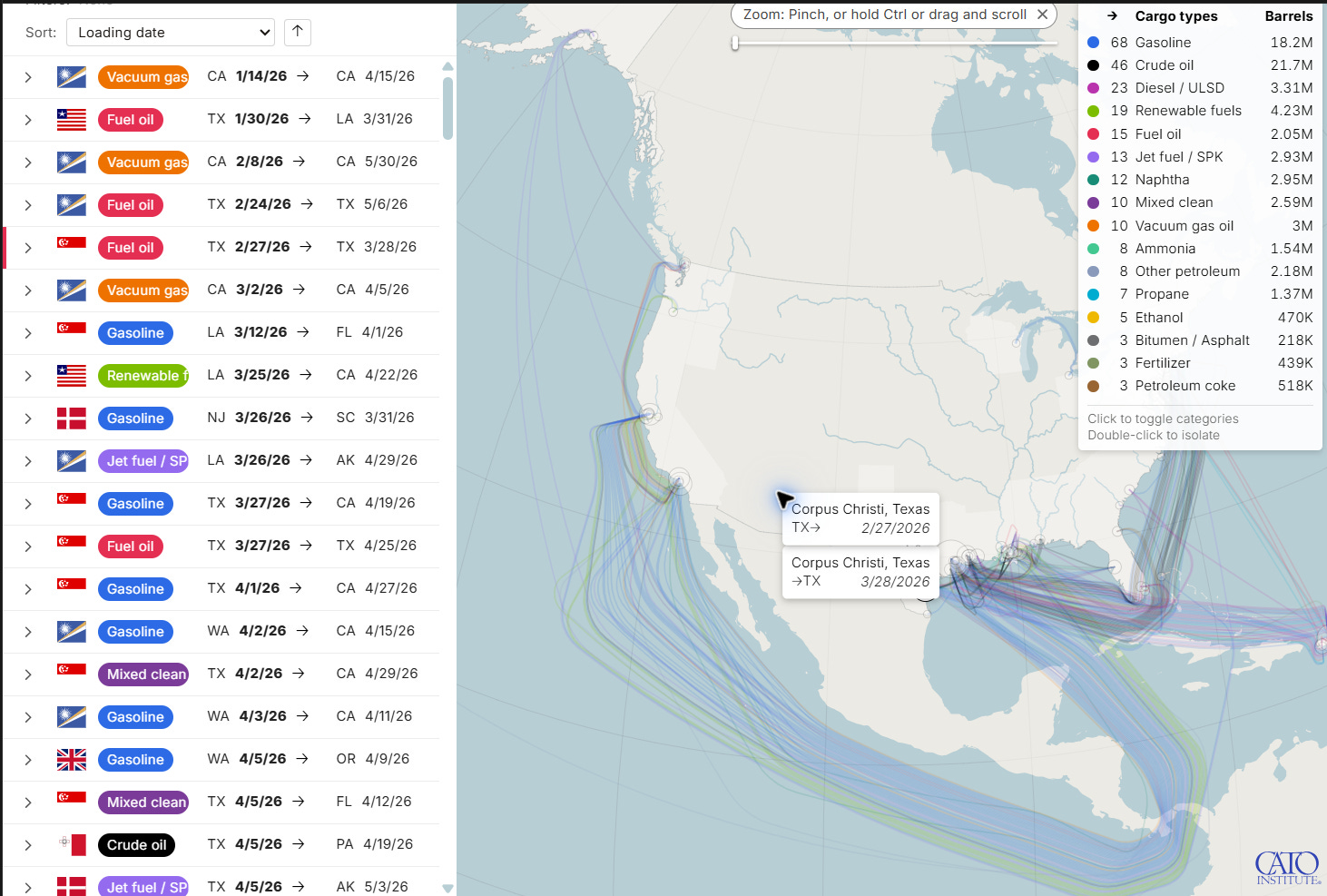
Remember, the world economic tapestry is connected through the needle of trade.
Even countries that are “energy independent” are connected by the markets. The price of crude is no exception.
Here is the transit data from the International Energy Agency.
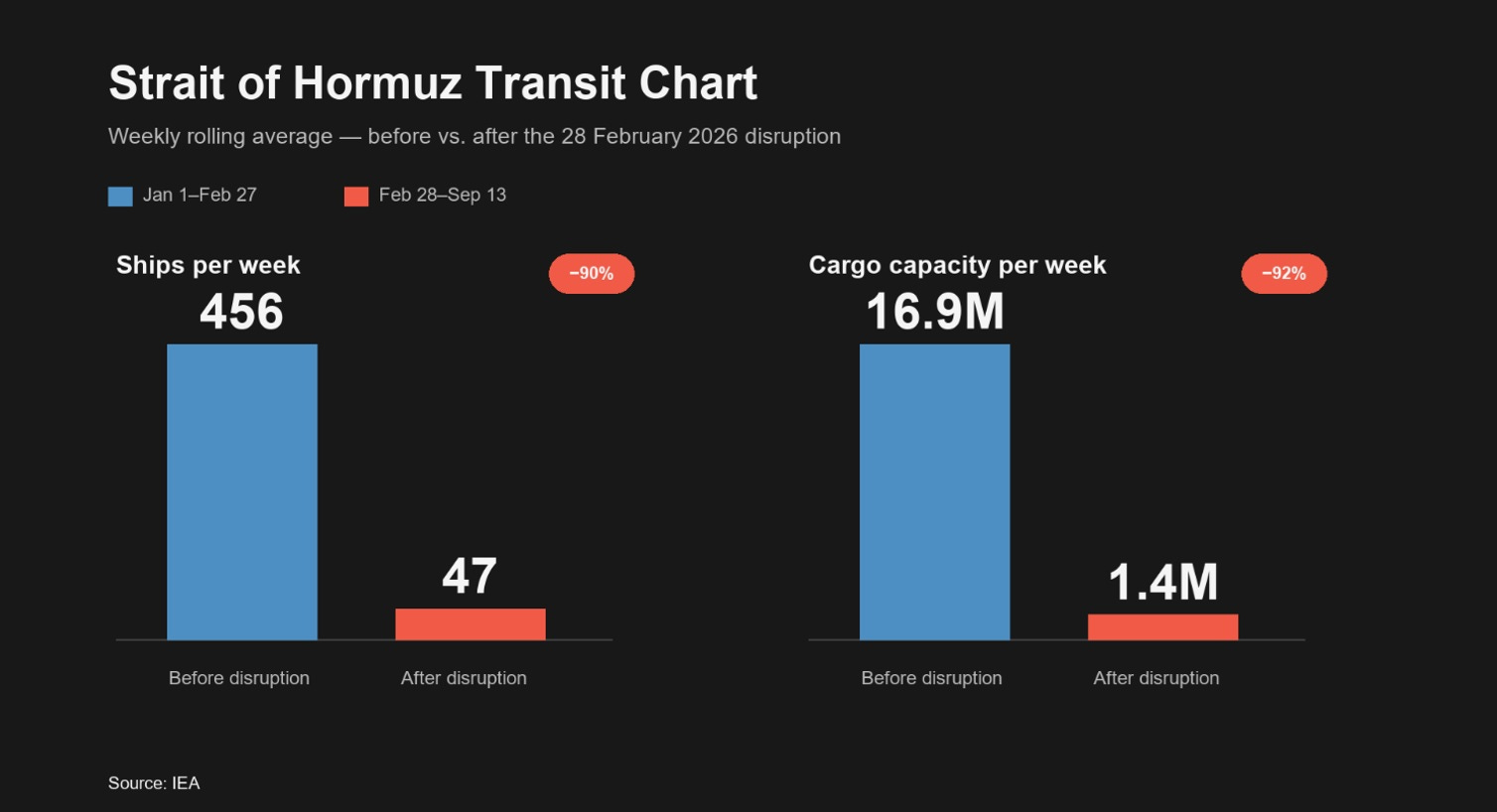
No matter how much bluster we hear about oil moving, tanker transits tell the truth.
In the end, the war in the Middle East has created major implications for energy security and affordability – and for the world economy.
Iran is definitely feeling the pinch, and the U.S. blockade is inflicting serious pain by stopping Iranian crude from leaving the Strait of Hormuz.
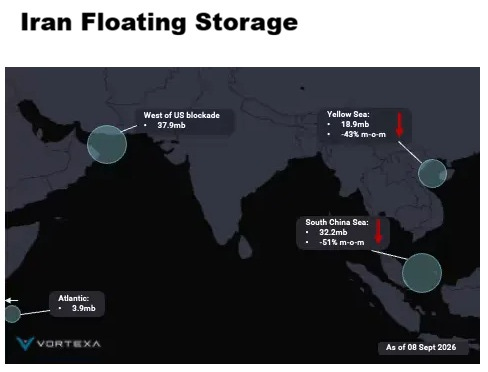
Vortexa data shows Iranian crude loadings fell to around 210kbd in August, down from roughly 2mbd earlier this year. This was their lowest level since 2020. Also, fewer barrels still loading are not translating into fresh Iranian crude clearing the Gulf. This will impact their floating storage that is still being moved.
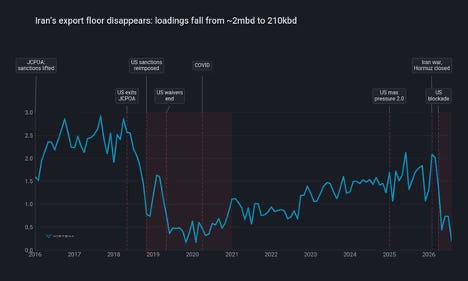
And there are tealeaves that Iran is still making money through those ship-to-ship transfers in Asia.
The latest: U.S. Treasury is expanding its grip on Iran’s cash flow by sanctioning Japan’s BitBank, which operates a spot cryptocurrency exchange and is licensed by Japan’s Financial Services Agency.
One key thing to watch now is how much of Iran’s floating storage remains available to China and other buyers. China will continue to buy, but with no reserves coming out of the Strait of Hormuz to fill that floating storage, inventories will go down. That’s when Iran will feel more pain, but it will take more time.
Vortexa analysts recently wrote, “Iran entered the blockade with substantial volumes already positioned closer to its principal buyers, including crude held on tankers in Asia. Those barrels have provided a buffer, allowing Chinese refiners to continue receiving Iranian crude even as fresh exports from Iran collapsed. But that buffer is finite. “
Eventually China will need to look for other areas to buy their crude.
You can bet U.S. President Donald Trump will have another energy discussion with Chinese leader Xi Jinping at their summit on September 24. Don’t be surprised if you hear of a promise for big oil buys.
So get ready for a lot of social media posts of threats and promises. This week will surely be eventful. But remember, keep checking publicly available tanker trackers like Lloyd’s List to track the truth.
Remember, the agnostic flow of trade doesn’t lie.
**ON A PERSONAL NOTE— I will be offline for the next several days, as I am the keynote at the Breakbulk Americas conference in Houston. I will try and report some new information I learn on breakbulk when I return!