


Higher winter bills set to impact consumers around the U.S. Midterms
Heating oil prices well above the last 10 years
Saudi Arabia refining capacity outtage more than Russia
The latest U.S./ Iran war shock is looming and you read about it first on my Substack.
Andrew Lipow, president of Lipow Oil Associates, warned before it became headlines in the mainstream media that the refinery capacity cuts would impact heating fuel prices.
The National Energy Assistance Directors Association (NEADA) has announced the projected increase in heating oil will be more than 2.5 times the rate of inflation.
NEADA is also raising the alert on families that heat with electricity and natural gas. Eectricity are projected to pay 9.0 percent more, natural gas customers 5.8 percent more, and propane customers 8.7 percent more. Households that rely on heating oil face the sharpest increase: 31.3 percent.
The average U.S. household is expected to spend $1,030 on heating from mid-November through mid-March. That’s an $82 increase from last winter.
“This is a warning that too many families are entering winter with no room left in their budgets," said Mark Wolfe, executive director of NEADA. They have already experienced record high summer cooling costs and now they are facing home heating costs that are rising more than twice the rate of inflation.”
NEADA is urging Congress to increase funding for the Low Income Home Energy Assistance Program from $4 billion to $7 billion. They are urging the additional funding is needed before winter bills arrive.
Unfortunately this hit to the household budget comes at a time where American consumers are paying higher prices at the pump and at the grocery store.
The expected price hikes are also going to happen before the Mid-Term elections.
Using fuel cost impact analyses from Lipow, alongside data from the Energy Information Agency and Trade Partnership Worldwide, I created this map to highlight major home-heating energy sources by state and identify key battleground regions.
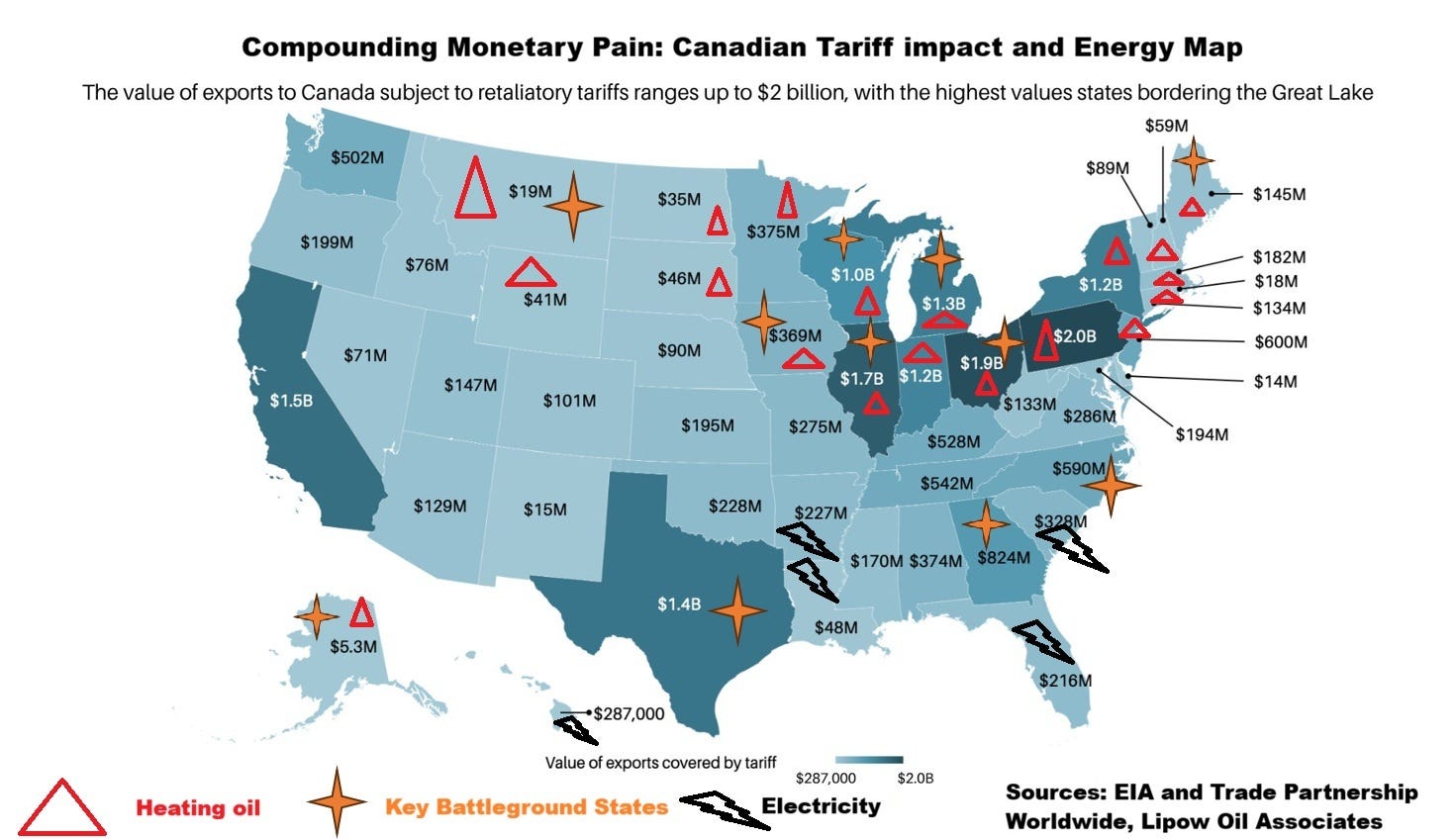
States like Maine, New Hampshire, Vermont, and Connecticut will be disproportionately impacted by the price shock. 80% to 85% of all residential heating oil is consumed in New England and the Mid-Atlantic.
With U.S. distillate inventories currently tracking below their historic 5-year lows the hole in this bucket can only be remedied with the resumption of the Freedom of Navigation through the Strait of Hormuz, and damaged refineries repaired.
State of Oil Trade and Refinery Capacity
Latest data from Lloyd’s List show 107 vessels transited September 7-13. That was up an additional 6 from the week prior.
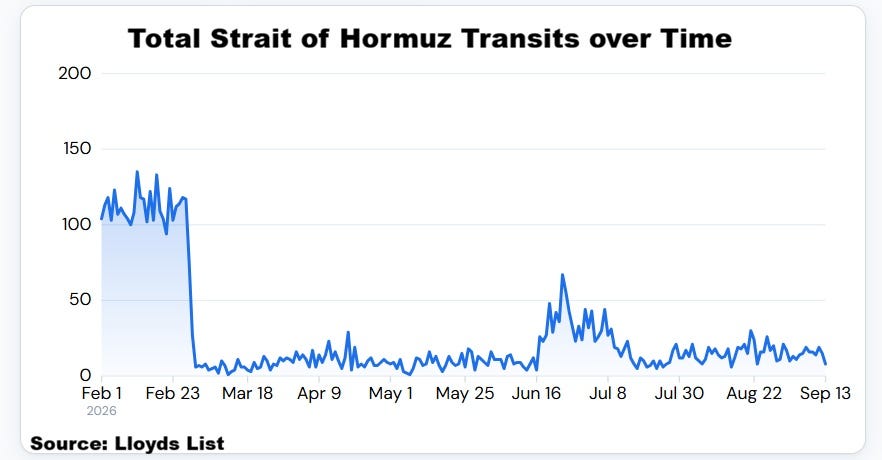
Tanker transits through the Bab el Mandeb have also dropped off.
The attack on Saudi Arabia’s East-West Pipeline by the Iranian-backed Houthis will further dampen tanker transits. The capturing of Perim Island by the Houthis is also expected to impact the energy trade.
“While supplying 1.8 million barrels per day to its refineries on the Red Sea coastline, Saudi Arabia also used this pipeline to divert 4 to 5 million barrels per day of crude oil that had been transiting the Strait of Hormuz,” said Lipow. “In total, the pipeline shut down could impact nearly 7 million barrels per day of crude oil which will ultimately affect already tight gasoline, jet fuel, and diesel supplies.”
According to energy data, Middle East refinery output fell roughly 27% in Q2 2026 to around 6.5 million bpd. This cut in refinery capacity is more than the damage sustained in Russia’s war on Ukraine. The Ukrainian strikes on Russia’s diesel producing refineries have knocked out around 25% capacity according to reports.
President Trump is blaming Russia’s war on Ukraine for the surge in diesel prices. Trump posted Monday both countries agreed to stop attacking energy infrastructure.

That unfortunately was shortlived.
Less than 24 hours, the General Staff of Ukraine confirmed reports of Ukraine Drone strikes. The Exilenova+, the Rosneft-owned Syzran Oil Refinery was a target in that early morning drone attack.
The IEA has estimated the global refining impact of these wars is around 5% (4.5–5 million bpd) in the second quarter.
“Refineries in North American and Europe. are producing as much as they can,” said Lipow. “Damage from missile/drone strikes in the Middle East and Russia are crimping about 2 million barrels per day of diesel supply, representing 8% of the world demand.”
Heating Oil Prices
We have yet to recieve U.S. government data on fuel oil because the EIA pauses weekly fuel oil tracking in the summer. It resumes in October.
This chart of heating oil from Trading Economics shows you the massive spike in prices today.
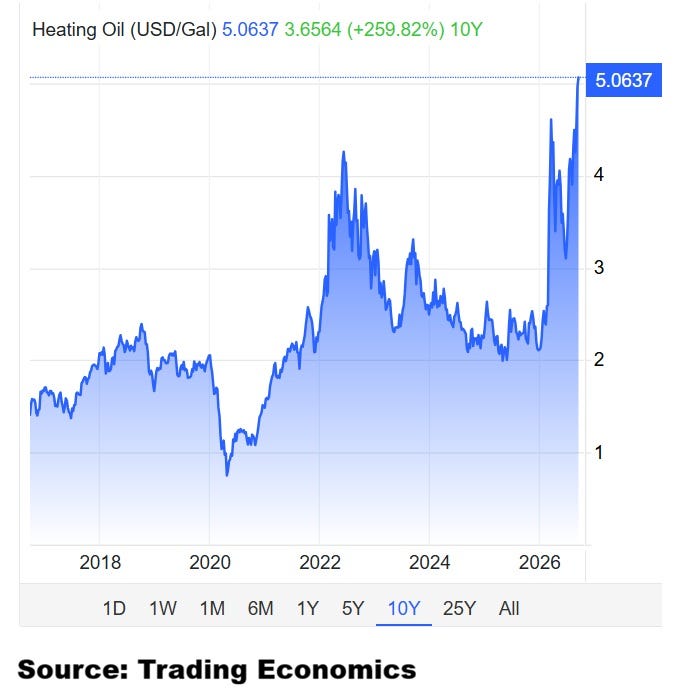
Experts say consumers feel the pinch immediately because heating oil prices normally go up 24 to 48 hours after a shipping disruption, reduction in refinery capacty and wars such as the U.S. war with Iran both impacting refinery capacity and oil flow.
To add insult to injury those who heat with fuel get another sticker shock- the delivery costs for that oil will cost more because of the higher diesel prices.
The big question overhanging the world now is just how high prices can continue to go? The hole in the oil bucket is still there and the existing operational refinery capacity is going at full tilt.
“A prolonged shutdown of the pipeline will drive the national retail price of gasoline to over $4.50 per gallon and the price of diesel fuel to over $6.50 per gallon,” explained Lipow. “In California, gasoline and diesel prices would hit $6.50 and $8.50, respectively.”
Last week the Port of Los Angeles executive director Gene Seroka warned about the rising diesel impacting the trucks moving containers in and out of the port.
“Diesel prices are up about 80 cents per gallon over the last month and 70% higher than one year ago,” said Lipow. “Diesel futures prices up 5% this morning.”
We will see how this compounding energy cash crunch plays out when Americans head to the polls this midterm election.
Expect more political bluster and backlash in the coming days. Just remember tankers and refineries don’t lie.