


Transitory inflation lags supply chain shocks by 3 to 12 months.
Goods made with costlier materials and shipped at higher freight rates sit in storage until older, cheaper inventory sells through.
Diesel is a double stealth tax on food prices. Farmers pay more for diesel and fertilizer to grow crops, then diesel-powered trucks add a second cost to get produce to stores.
You might have heard experts on business news networks say they expect inflation to come down soon, citing lower energy prices. Unfortunately, they are failing to see the complete picture.
They are not threading the needle of the supply chain, and their predictions are creating an artificially rosier picture for consumers.
The supply chain is a tapestry comprised of numerous patches that rely on each other to create and move the products people consume, wear, and use. Energy is just one of the patches.
Man not only stitches this tapestry together with innovation, but also rips it apart with trade policy and war. Trade data proves this point.
A recent example of this tapestry unraveling and re-stitching started in 2017 with the first Trump trade war with China. Since then, a series of other major supply chain disruptions has followed, including the COVID-19 pandemic, the Ever Given blocking the Suez Canal, labor disputes, the Trump Liberation Day tariffs and global trade war, and the Iran War.
History shows transitory inflation follows a supply chain disruption anywhere between 3 months and a year after the initial shock, for both the Consumer Price Index and Producer Price Index.
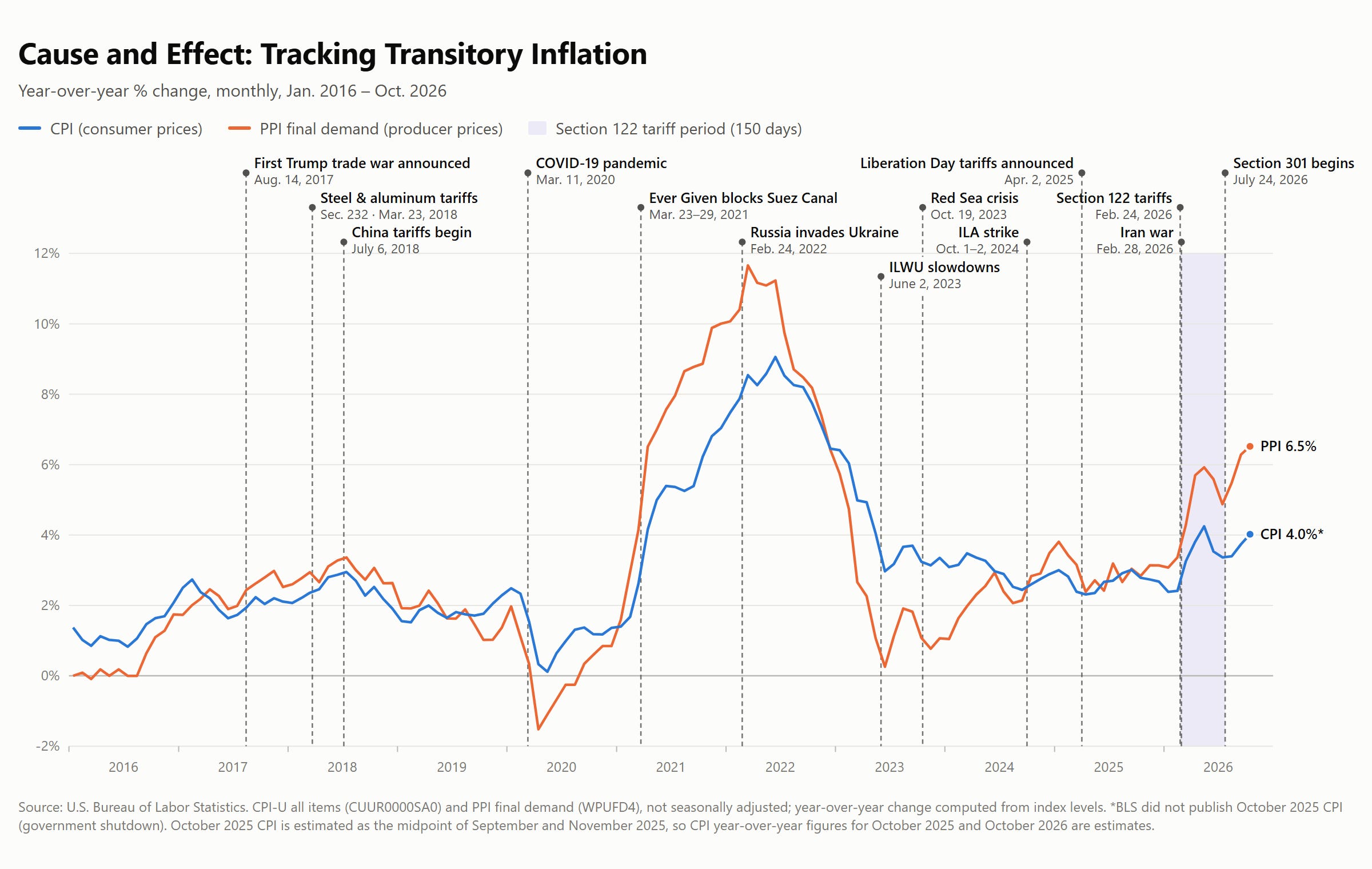
There is always a delayed economic response to higher supply chain costs. The timeline is based on the life cycle of the products.
Tracking Inflation
The products showing the fastest price increases are fresh fruits and vegetables.
These products are most price-sensitive because they are produced and moved with higher-cost energy inputs. Diesel is a double whammy. Farmers are paying more for fertilizer and diesel to grow and produce their crops.
The second inflationary cost layered on top of these costs is the higher prices being charged by the diesel-powered trucks moving the produce to the store. Diesel is the ultimate stealth tax on the consumer.
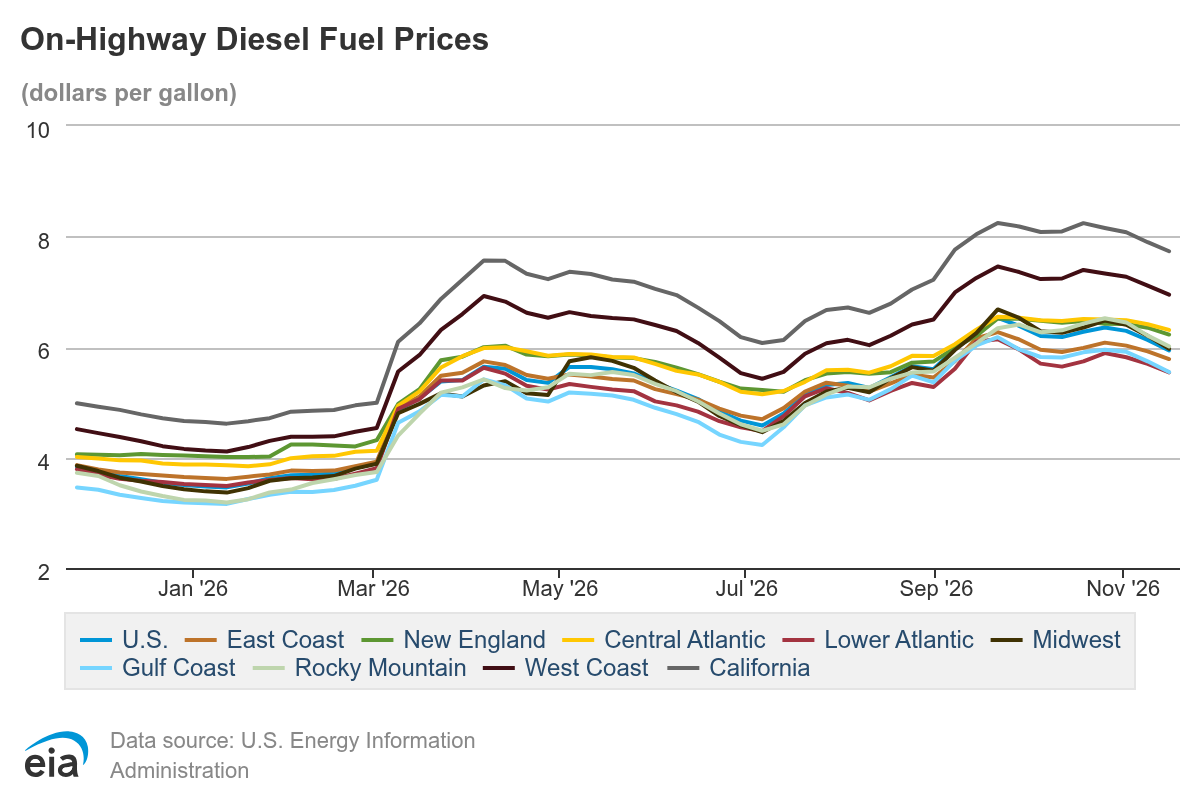
The higher food prices come at a time when consumers are not paying higher heating fuel bills.
Global Supply Chain Pressures
A product’s supply chain is not simple.
Depending on how complex a product is, you can have anywhere from 3 to 6+ supplier tiers. Each tier depends on the other for a product to be completed.
In addition to tier suppliers, you have manufacturers or assemblers that produce the finished goods and logistics companies that move the product by road, ocean, and air. Finally, once the freight reaches its destination country, distributors, wholesalers, and retailers hold the inventory and sell the finished product to customers.
Price increases in any of these supply chain nodes add up and are passed along to the consumer.
The New York Federal Reserve Global Supply Chain Pressure Index tracks these costs. The GSCPI integrates data from the Baltic Dry Index (BDI) and the Harpex index, as well as airfreight cost indices from the U.S. Bureau of Labor Statistics.
The GSCPI also factors in the Purchasing Managers’ Index (PMI) surveys of manufacturing firms across seven interconnected economies: China, the euro area, Japan, South Korea, Taiwan, the United Kingdom, and the United States.
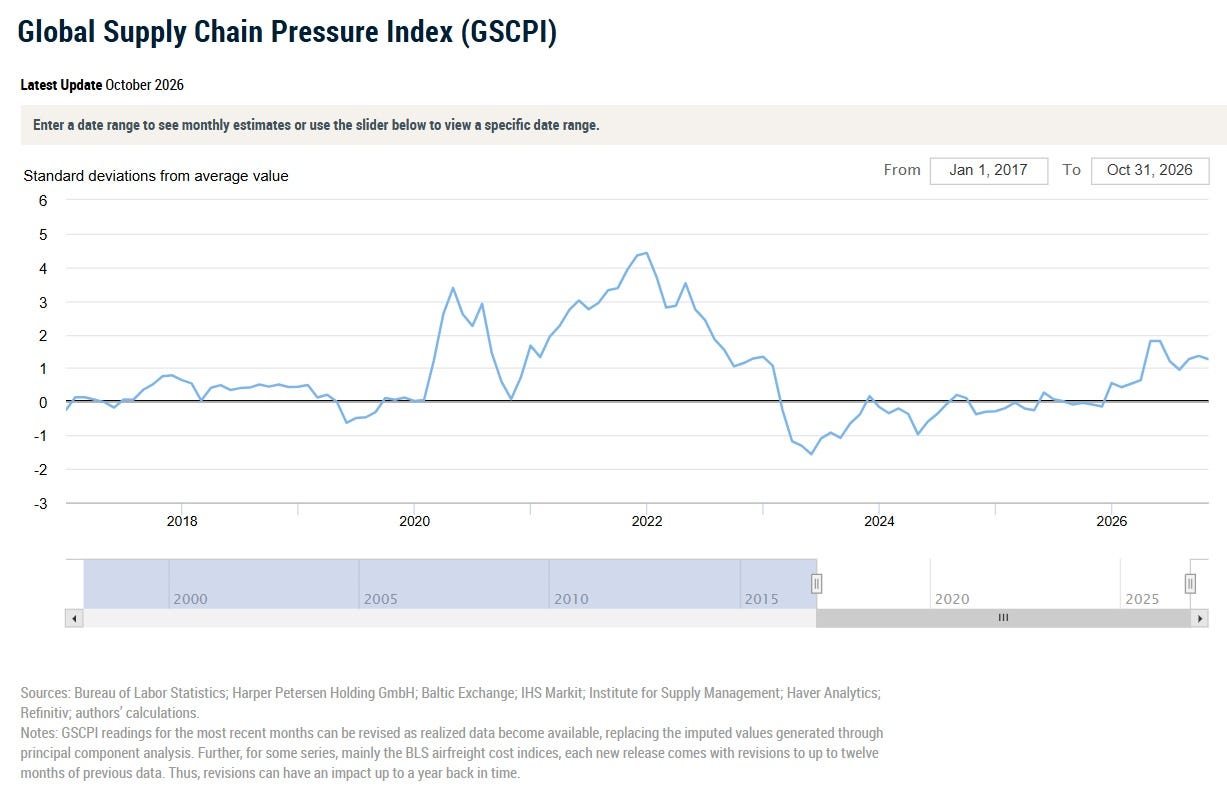
Trade shifts, driven by manufacturing relocation due to tariffs or war-created bottlenecks, cause downstream strain.
“Tariffs are making businesses relook again and again at who and where they’re sourcing from,” said Matt Everson, Senior Vice President of Sales & Marketing at IntelliTrans.
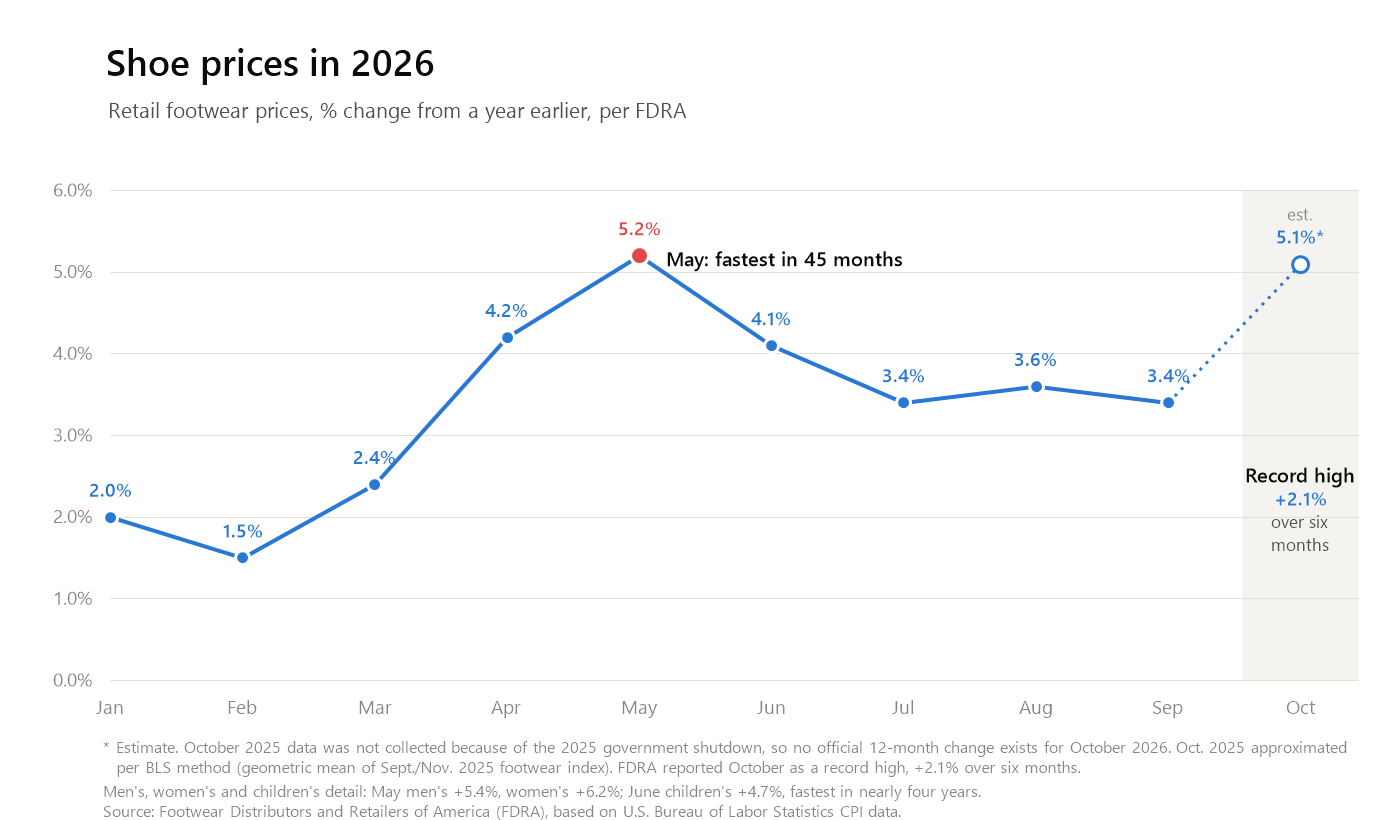
The Footwear Distributors and Retailers of America (FDRA) said the inflationary impact of the April 2025 Liberation Day Tariffs started showing up in March 2026, when the CPI jumped from 2.4% to 3.3%. The peak hit in May 2026 at 5.2%.
Footwear prices dropped for several months but spiked again in October. Because the government shutdown in October 2025 prevented the CPI data release, there is no official year-over-year comparison for that month.
FDRA economist Gary Raines spoke about the trajectory of shoe prices: “As we anticipated earlier, we have more early evidence that retail footwear prices are set to continue rising — albeit at a decelerating rate — as we head into 2027.”
U.S./Israel War on Iran
In addition to the current Trump tariffs, there is also the layering impact of the U.S./Israel war with Iran. This war has driven up raw material costs for more than 70,000 goods made from petro-based chemicals, as well as logistics costs.
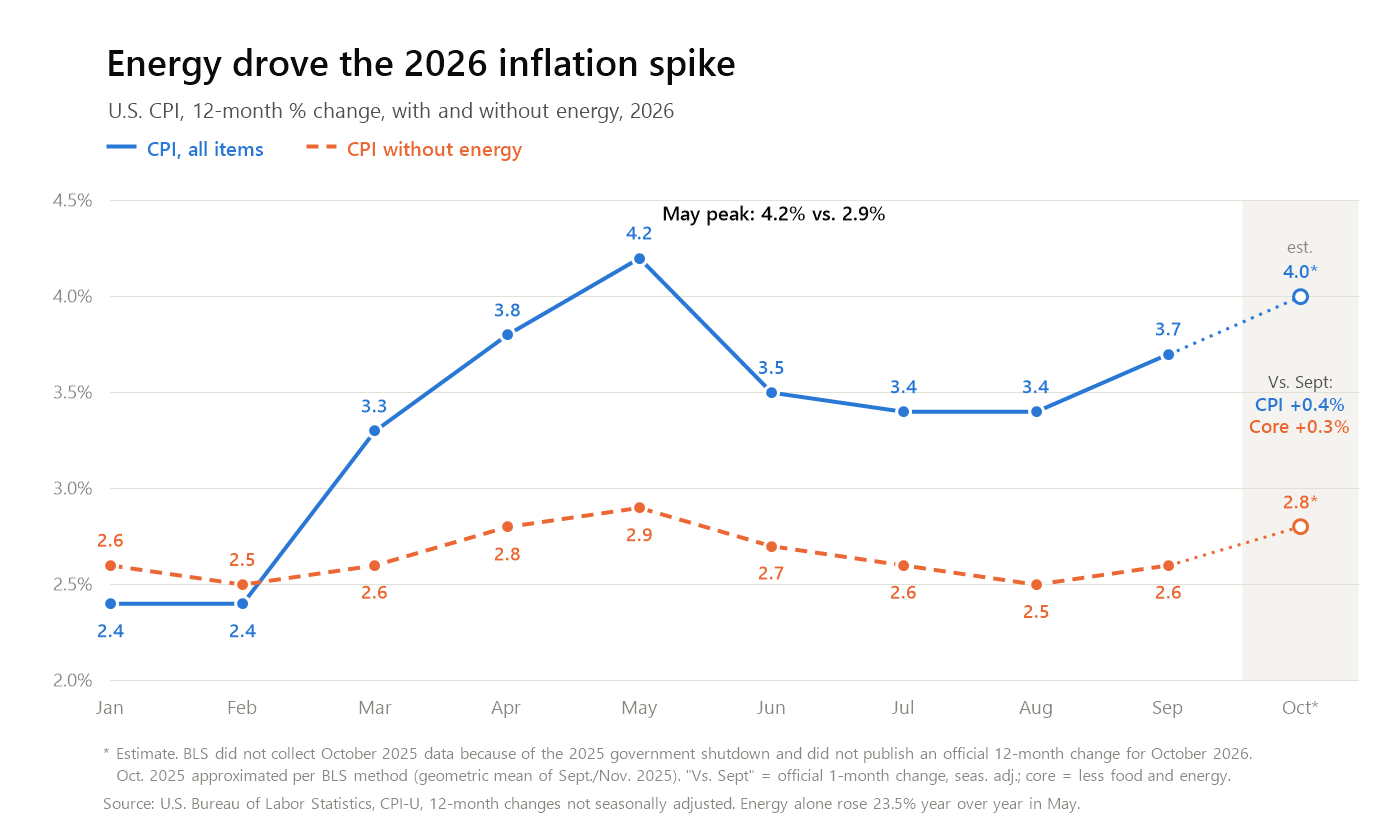
All of these costs pile up on top of tariffs, creating transitory inflation.
It’s transitory because the goods are stored. This is the lag factor some on Wall Street overlook.
Many consumer goods are being made with pricier materials, shipped at higher freight rates, but they don't hit store shelves right away. The products sit in warehouses until the cheaper inventory sells through or the season arrives, and then the higher prices hit. This is why I am constantly warning that inflation brews in the warehouse.
For example, some footwear companies and manufacturers have told me their Spring lines will be priced higher because they placed orders in July, when raw material prices were higher due to the Iran war.
The pulling forward of freight by companies to avoid paying higher tariffs is also being ignored by some of these experts.
The Logistics Managers’ Index (LMI), which tracks inventory levels, warehouse costs, transportation capacity, and pricing, rose to 70.7 in October, up slightly from 70.2 in September. It was the second-highest reading in four years. The frontloading of freight has increased inventory, which is driving warehouse rates up.
Pawan Joshi, CSO of e2open, a WiseTech Global Group company, explained that the tariffs’ impact extends beyond the goods moving back and forth to the infrastructure created to simplify their movement.
“It was more about the scale of the tariffs and the speed at which they came in,” said Joshi. “Our global commerce is built on the last 50 years of stable trade. You knew what was going to happen, and if things were changing, you had a heads-up. Today, the speed of things is changing. The tariffs have definitely upended everything, and the wars haven’t helped. You’ve got to almost start from a clean slate of paper and say, if I have to pay tariffs, and if I source it from some other place, my total landed cost could be different.”
Landed costs are comprised of a product’s value, freight costs, insurance, duties and fees, warehousing, and final mile. Each node of this supply chain has its own costs.
“Tariffs grabbed the headlines, and they’ve eased since the Supreme Court ruling, but freight costs haven’t,” said Brian Kobza, chief commercial officer of IMC Logistics. “We estimate the landside cost of moving a container from the port to the warehouse is up 16 percent since June 2026 alone, led by diesel, which is up more than 60 percent since April 2025 and still near record highs, plus higher driver pay. Carriers have absorbed rising costs through three years of a freight rate recession, and they can’t anymore. Importers can get tariffs refunded, but not transportation costs, and those get built into the price of goods well into 2027.”
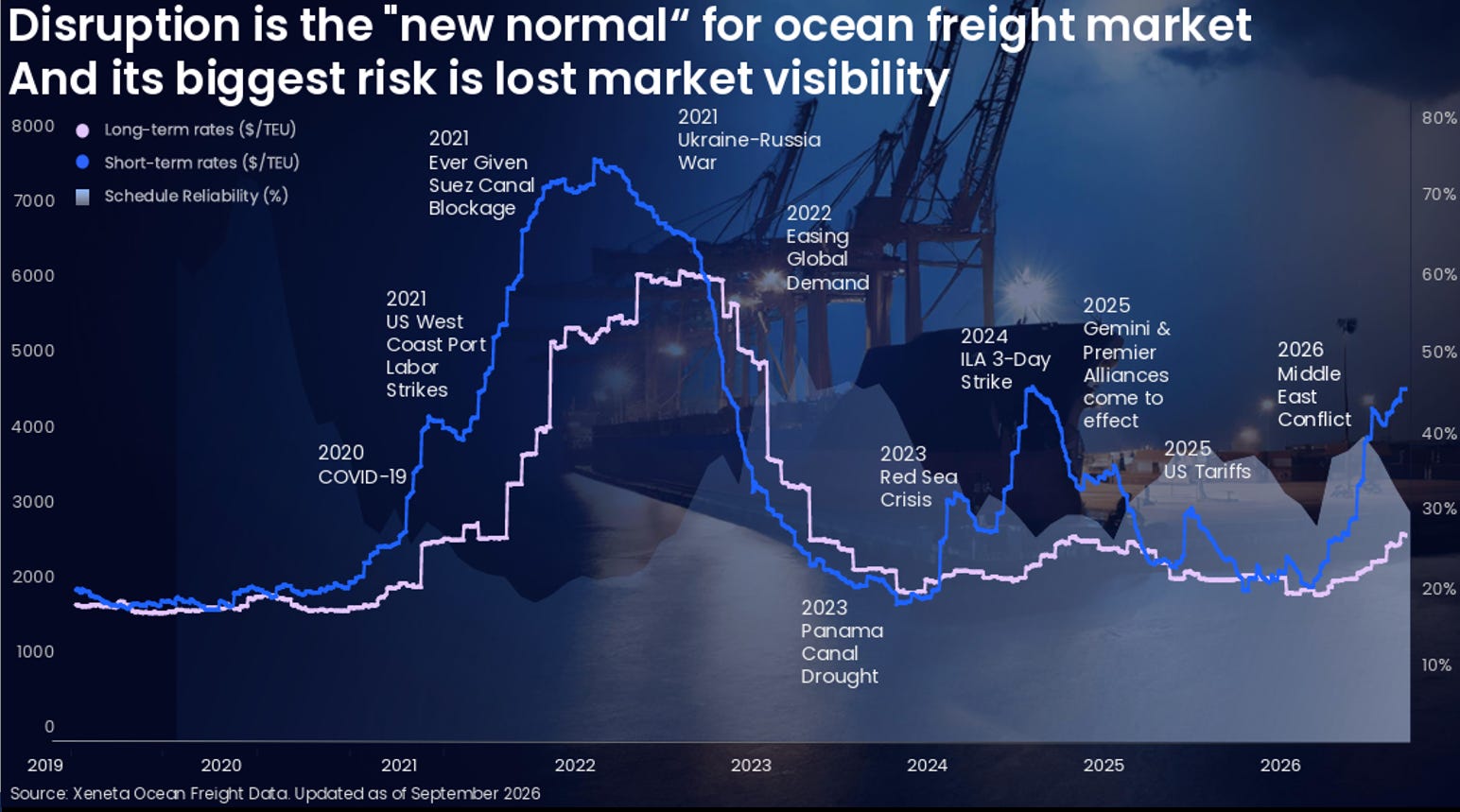
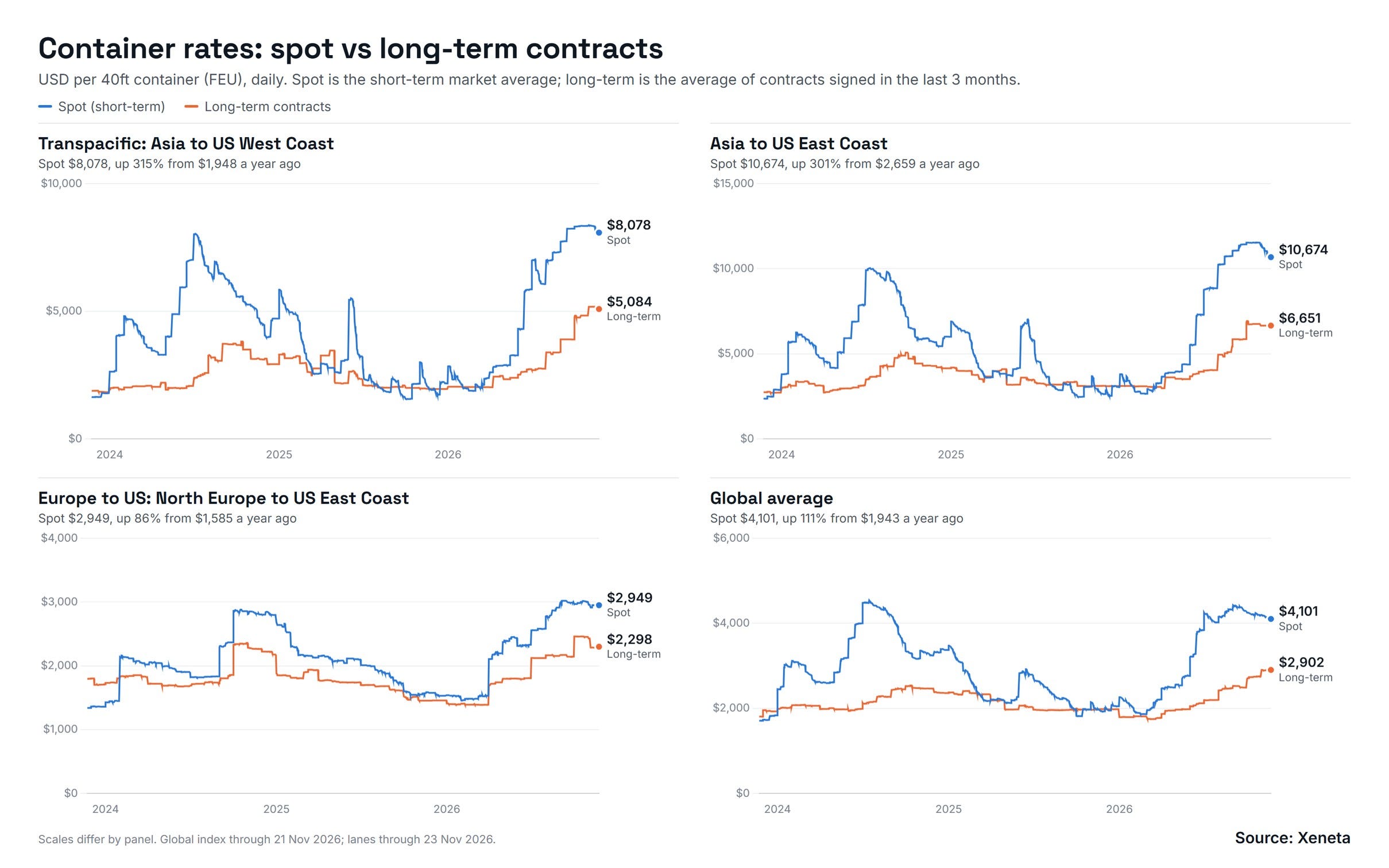
Xeneta’s ocean freight data shows the impact that disruptions have had on both long-term and short-term rates.
Inflation Impact
All of these costs are affecting consumers at a critical time of year- the holidays.
In a recent LendingTree online survey of 2,000 respondents about their Thanksgiving plans, nearly a third (32%) said hosting is a financial strain, while 78% have a budget, including 25% who said the budget is strict.
More than half (53%) of those planning to celebrate Thanksgiving said inflation is affecting their plans or budget, with 25% changing food choices, 22% using more coupons, and 14% cutting back on guests.
Around two-thirds (62%) say they may need to borrow to host Thanksgiving, including 38% who plan to use credit cards to cover the costs and 18% who plan to use buy now, pay later (BNPL) loans.
In a November 18 American Farm Bureau Federation (AFBF) survey, the cost of a Thanksgiving dinner for 10 has risen consistently since 2024. This year, the price per person is up around 6% from 2025 to $5.86 per person. The biggest driver of the price increase is the turkey.
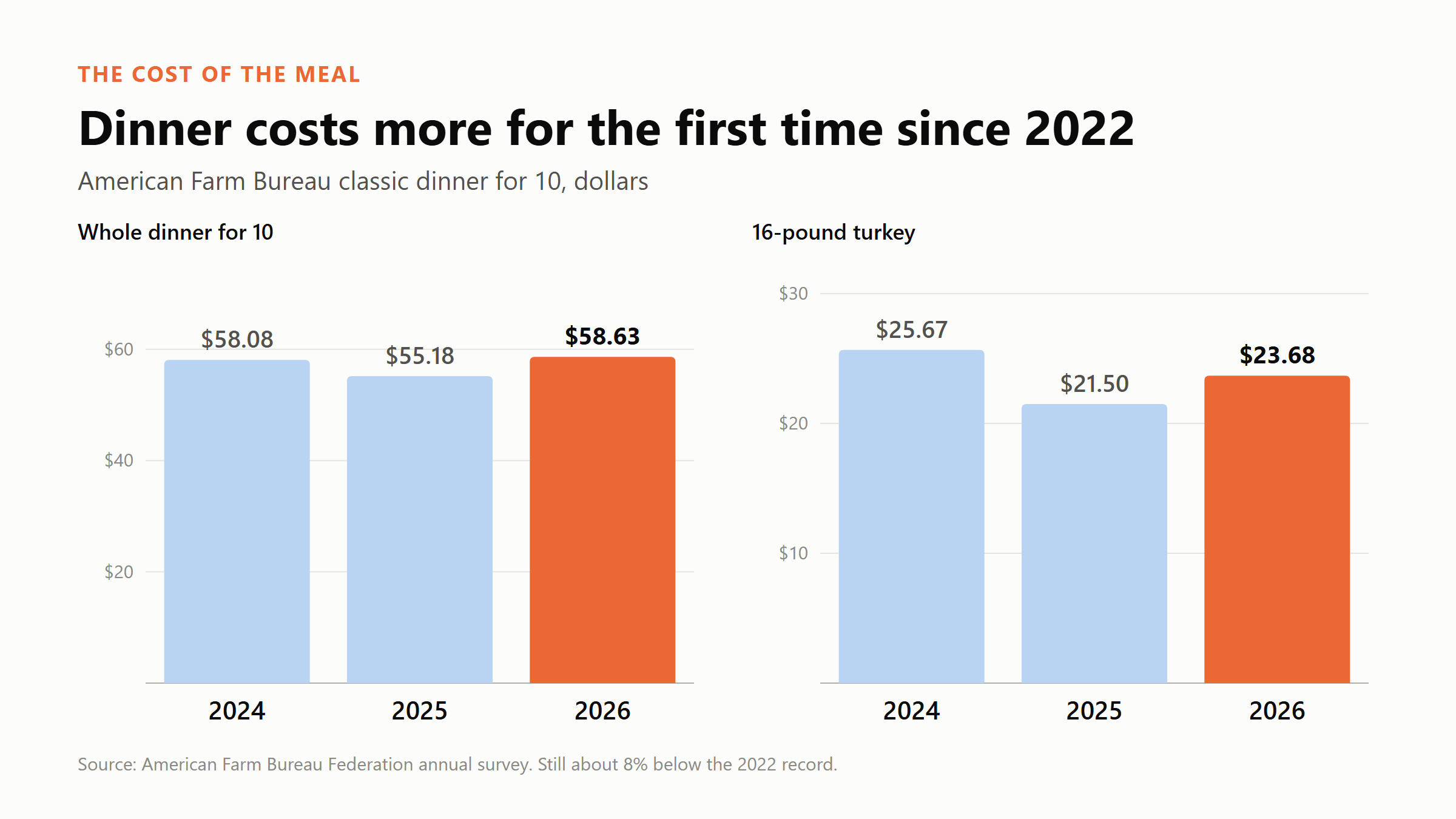
But this is not an absolute pricing figure. A company’s supply chain can help soften the inflationary blow.
Companies like Walmart have relationships with turkey producers and strong buying power within their supply chains, allowing them to adjust costs compared to competitors. Their size, compared to smaller grocers, also gives them a competitive advantage this holiday season. They can also afford to sell at a lower price because they can sell more meals.
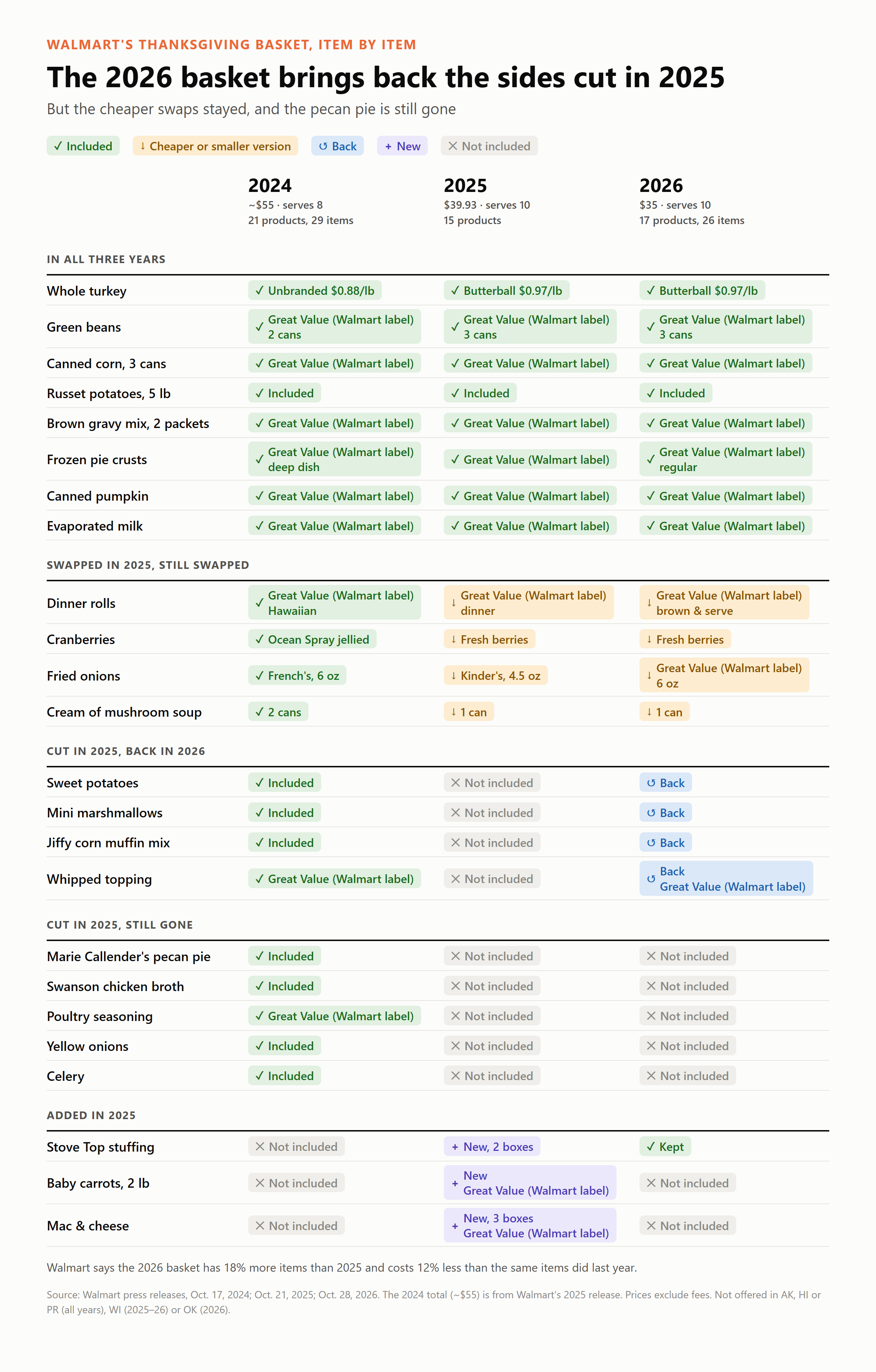
Economies of scale may work for Walmart, but many companies and consumers do not have that luxury.
Looking ahead to 2027, the supply chain headwinds and inflationary pressures will continue. The reduced refinery capacity constraining the production of refined fuels like diesel will persist. Even if the Strait of Hormuz opened normally tomorrow, Wood Mackenzie estimates that, depending on the severity of the damage to pipelines or refineries, it could take weeks to a multi-month or multi-year phased rebuild.
The ship-to-ship transfers oil tanker owner/operators are using to move energy around the Strait of Hormuz may be a good workaround, but they are time-consuming and costly.
Additional Trump tariffs are also expected to be enacted at the end of this year and next. The looming Section 301 tariff on excessive manufacturing will be added on top of the existing tariffs being paid.
This means the orders for both back-to-school and the summer season could face higher input costs.
Until these supply chain headwinds ease, inflation risk will not abate.