


U.S. Treasury Secretary Scott Bessent told Fox News the U.S.-China trade truce would be extended until January 10.
China is Iran’s number one buyer of oil
If Trump moves forward with a diesel export ban, China could potentially benefit as Europe and Asia look for alternative sources of diesel.
There will be a lot of headlines about the summit between President Donald Trump and China’s leader Xi Jinping, and the promises to be made. But remember, trade will be the ultimate arbiter of the truth.
It’s been a decade since Xi has set foot in the White House. Today’s summit comes at a time when the security of the energy supply and the impact of the U.S./Israel war on Iran have impacted the global markets. Trump is also floating a diesel ban to lower domestic diesel prices. However, such a policy could affect global fuel markets.
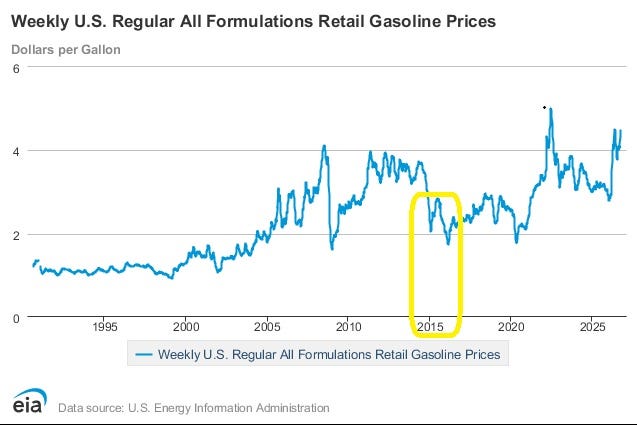
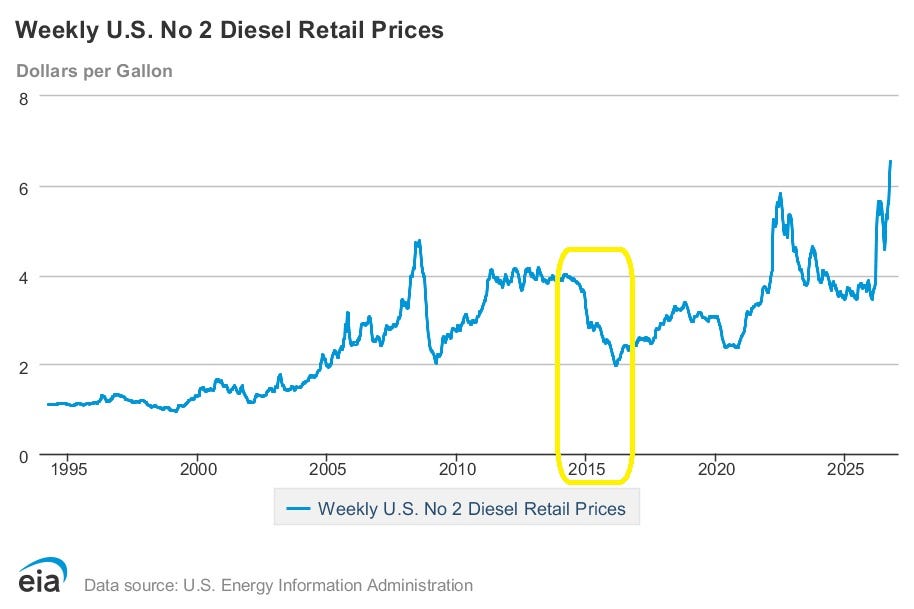
During Xi Jinping’s September 25, 2015, White House state visit with President Obama, U.S. gasoline averaged about $2.33 a gallon and diesel $2.49 a gallon (not adjusted for inflation).
U.S.-China Trade Truce and Energy Markets
U.S. Treasury Secretary Bessent announced Wednesday the“Busan Agreement” trade truce has been extended by two months (November 10, 2026, to January 10, 2027) “To give negotiators more time to pursue a broader economic deal.”
While AI will dominate the Summit headlines, energy markets remain an important part of the broader U.S.-China economic relationship. It is important to stress the energy web China has created with Iran and how this trade relationship can influence supply chains.
Petrochemicals and refined petroleum products are critical to manufacturing, transportation, and global trade, meaning changes in energy flows can have effects throughout the broader economy.
China Remains a Major Buyer of Iranian Oil
China is Iran’s number-one customer, according to the U.S.-China Economic and Security Review Commission.
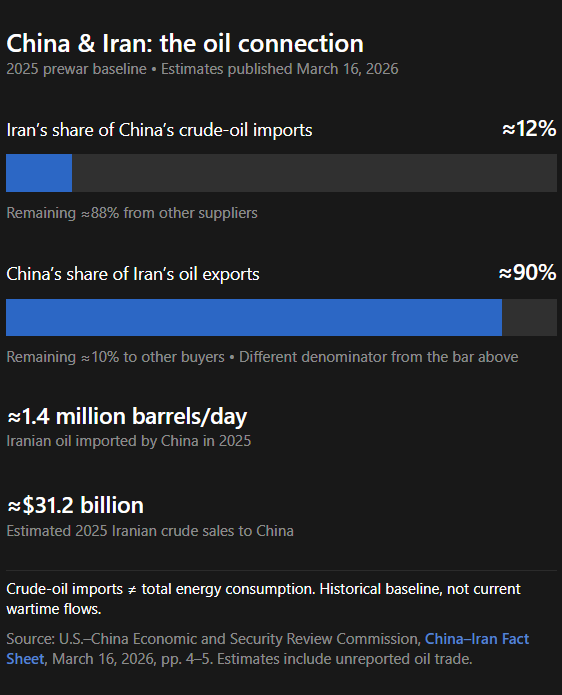
Since the start of this war, China has continued receiving Iranian crude. This includes cargoes moved through ship-to-ship transfers off Malaysia. Iranian tankers, filled with crude, act as floating storage, and the oil is then transferred to another vessel.
“The waters around Malaysia are an important transit zone for a lot of sanctioned and some non-sanctioned shadow fleet operations,” said Richard Meade, editor-in-chief of Lloyds List.
Oil exports from Iran to China have fallen sharply over the summer due to the U.S. blockade. Kpler and Vortexa data show China’s imports of Iranian crude in August were down 62% from the prior year.
In a Lloyd’s List briefing, United Against Nuclear Iran (UANI) reported that over the past few days, they have seen some Iranian dark fleet tankers move significantly farther north of the traditional Eastern Off Port Limits (OPL) area in the South China Sea near Malaysia.
"The Eastern OPL is still the place where tankers meet to pass cargo that ultimately goes to China,” said Charlie Brown, UANI senior advisor. “But (this is) a new pattern that’s emerged during this period of the second blockade by the United States.”
Also happening during this timeline, Malaysia updating its EEZ Act, which gives the country the ability to enforce its anchoring and cargo ship cargo transfer regulations in this area.
“Both of these developments are quite interesting, and perhaps there may be an announcement that there were enforcement operations or maybe some other issue,” said Brown.
“There always is a period of testing that follows the summits, and so in a week or so we might see what the next test could be,” Brown continued. “That could be further pressure on oil from Iran that is trying to get to China. It could be more testing of the situation in the South China Sea or near Taiwan. We don’t know, but you can always count on a test after a summit.”
U.S. Diesel Export Ban: Why China Could Benefit
China briefly banned diesel early on in the war to build up its inventories. After a month, China started to relax export volumes.
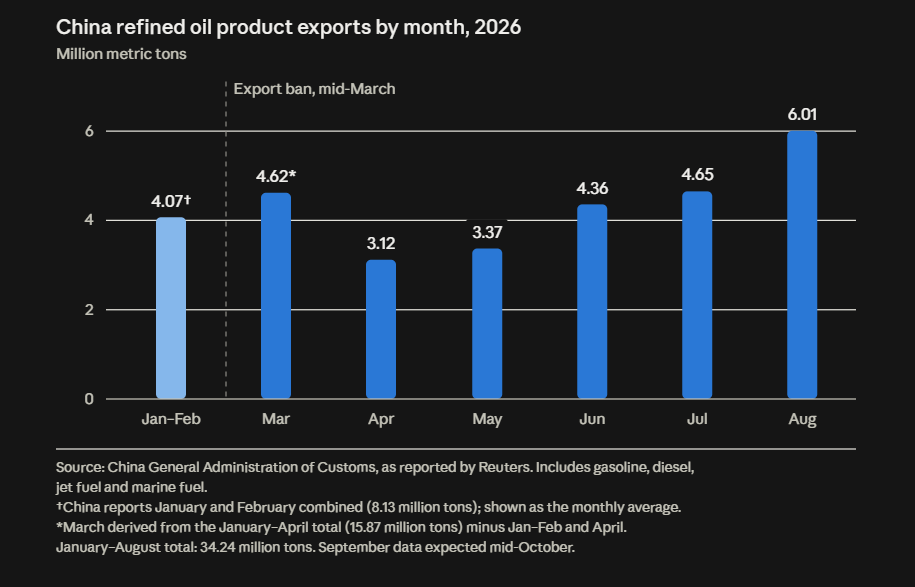
If Trump moves forward with the diesel ban, analysts say China stands to benefit because Europe and Asia will need to buy more diesel from China.
Kevin Book, managing director of ClearView Energy Partners, explained this ban could have negative consequences for the U.S. energy sector.
“Generally, barring diesel exports could have dire economic and reputational consequences for U.S. producers and may have only limited benefits for U.S. voters,” said Book.
A classic example of how energy prices are siphoning cash out of Americans’ wallets is Costco’s earnings.
When you remove the price of gasoline and currency effects from the company’s earnings, U.S. growth dropped from 9.0% to 5.6%.
Simply put, higher dollar sales don’t necessarily mean a similar increase in the number of merchandise sold. I have written about this before in prior articles.
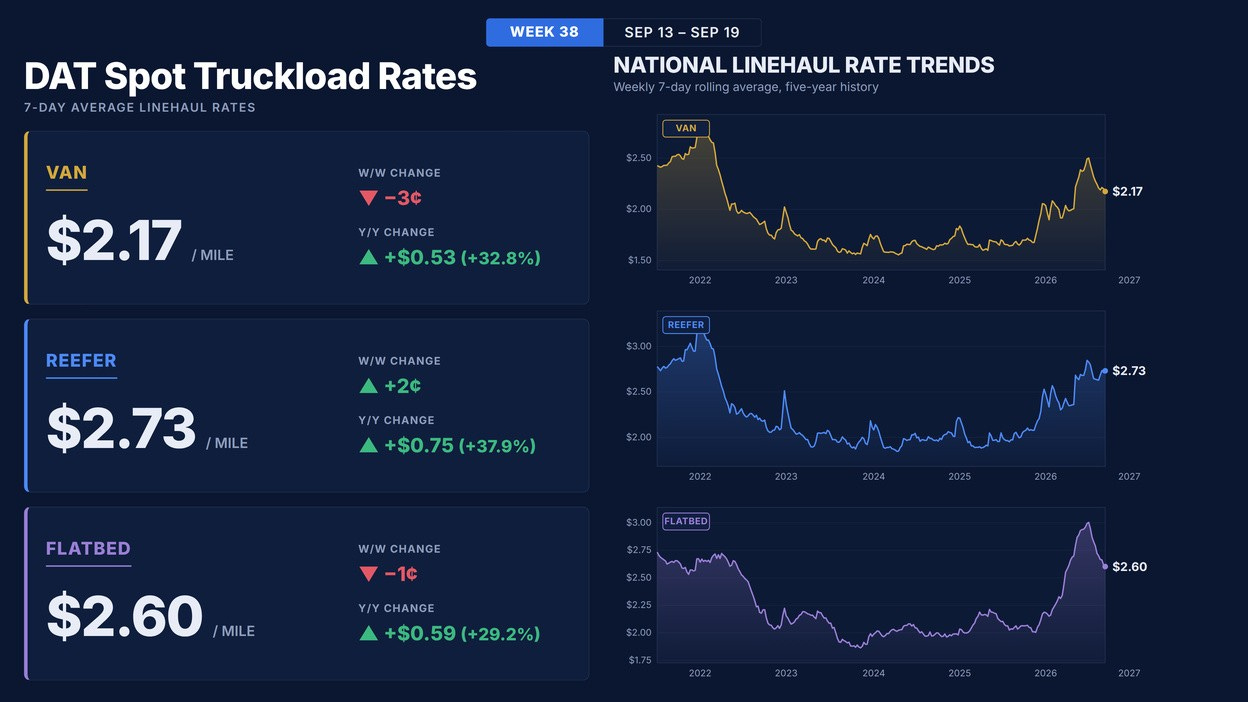
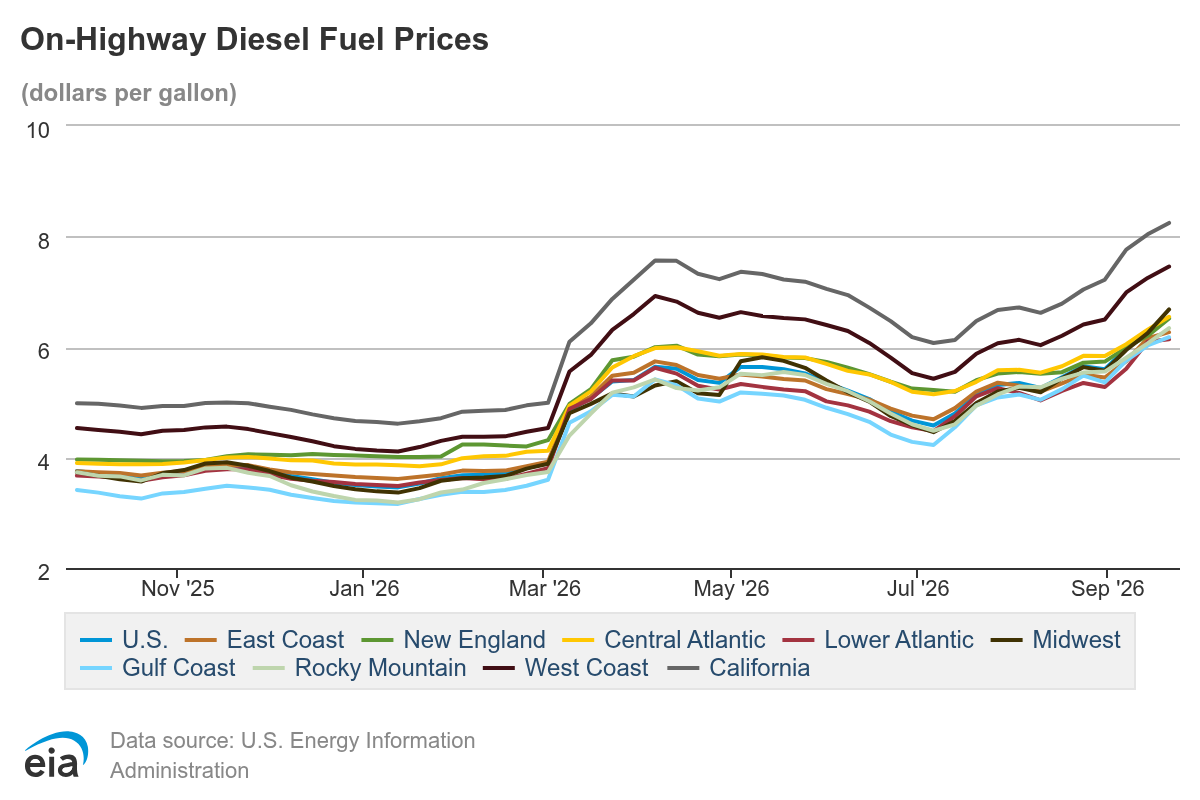
Since the war began on February 28, 2026, U.S. Energy Information Administration data shows U.S. diesel prices have risen about 71% and the U.S. jet-fuel benchmark about 79%.
Higher diesel and jet-fuel prices can increase transportation, logistics and operating costs across the economy.
To offset these rising costs, logistics companies have placed surcharges on package deliveries. The surcharges are based on the National U.S. Average On-Highway Diesel Fuel Price released by the U.S. Energy Information Administration (EIA) and are rounded to the nearest cent.
Ongoing volatility in the global energy markets is reflected in the active weekly fuel indexes for FedEx, UPS, and DHL.
Current ground and domestic package service surcharges range from 28.00% to 29.50%; current air export surcharges range from 34.00% to 45.25% across the carriers.
For comparison, before the U.S.-Israeli war on Iran, UPS's ground fuel surcharge was about 21.75%. Global air freight spot rates averaged about $1.17 per pound before the war, peaked at about $1.54 in May, and stood at roughly $1.42 per pound in August, according to Xeneta.
Logistics prices are folded into the price of goods. Economists have explained fuel, diesel and fertilizer make up 15% to 30% of produce costs.
MVP Logistics has posted “Produce is more exposed than dry goods because refrigerated freight pays twice: once for the diesel powering the truck and again for fuel running the refrigeration unit for the whole trip.”
U.S. Refinery Maintenance Adds Another Risk
Adding to these energy concerns is the timing of traditional U.S. refinery maintenance.
This pull-off of refinery capacity comes at a pivotal time, when U.S. refineries have been operating at maximum capacity to produce refined products.
Weekly Petroleum Status Report data showed the U.S. refinery utilization rate was ~94% for the week ending September 18. That was down 3 percentage points versus last week and the lowest level since May.
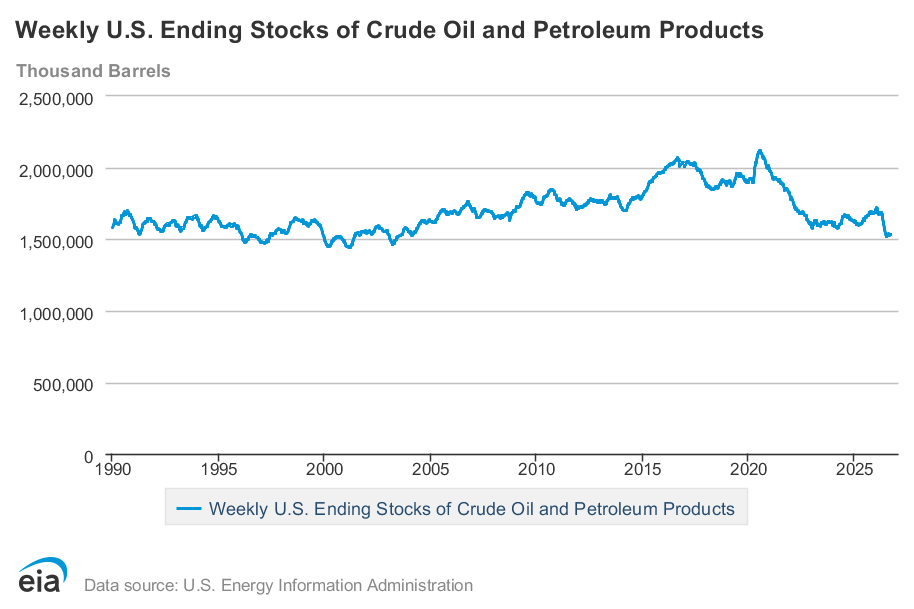
In a note to clients, ClearView Energy Partners wrote this was a signal that refinery maintenance season has begun.
PADD 2 (Midwest) had refinery utilization rates drop from ~100% to ~89% week-on-week.
While petroleum product exports remained up, net distillate exports fell to the lowest weekly total since June.
Could a Diesel Export Ban Raise U.S. Fuel Prices?
“Creating an artificial fuel glut is likely to lower prices, but the impact could diminish if refiners cut production runs or go into maintenance turnarounds,” said Kevin Book, managing director of ClearView Energy Partners.
Andy Lipow, president of Lipow Oil Associates, echoed those concerns.
“This is a bad idea with some serious unintended consequences,” said Lipow. “If the USA banned diesel exports, refineries in the USA would either have to store the excess that they could not sell, or simply not produce it.”
Lipow explained to solve that dilemma, refineries would reduce their utilization and process less crude oil.
“Utilization that is near 100% today might drop to 70-75%,” he continued. “Refineries that process less crude oil will produce less of everything else—gasoline, jet fuel, lube oils, asphalt. Shortages would develop in those product categories, and I would expect significantly higher prices at the pump.”
Low Distillate Inventories Could Increase Winter Risks
A former national security advisor told me, “As the weather gets colder, the energy crisis will exacerbate, and the Administration has not fully taken into account the range of impacts that diesel and other fuel shortages will create. All that’s needed is a major storm or natural disaster that temporarily disrupts US supply. Then, a worst-case scenario will become a reality.”
A Nor’easter is set to hit the Northeast this weekend. Weather-related disruptions could matter more if distillate inventories (like home fuel oil and propane) remain low heading into the winter heating season.
“With distillate inventories at their lowest level for this time of year since the EIA began reporting in 1982, concern is growing that early season storms could exacerbate the supply situation as we head into the heart of the winter and peak home heating oil demand,” said Lipow.