

“Containers Don’t Lie”
Hi,
My name is Lori Ann, and this is the phrase I am known for around the world when I am asked to explain how trade tells the truth in times of supply chain crisis. My phrase has turned into action. I created the Containers Don’t Lie Symposium. CDL is an invite-only Chatham House Rules event for decision makers in the world of supply chain, trade, and logistics. It is held in the U.S. and Europe.
I love trade data. Why? Because trade is agnostic. It does not play favorites. Trade moves based on supply and demand. Analyzing how trade moves can provide even greater clarity.
Just like water, trade will always find a way to flow.
It finds the path of least resistance—even if that path is long, winding, and more expensive.
Unfortunately, political bluster skews the reality of a situation. And there is lots of it.
But trade data blasts away the bluster!
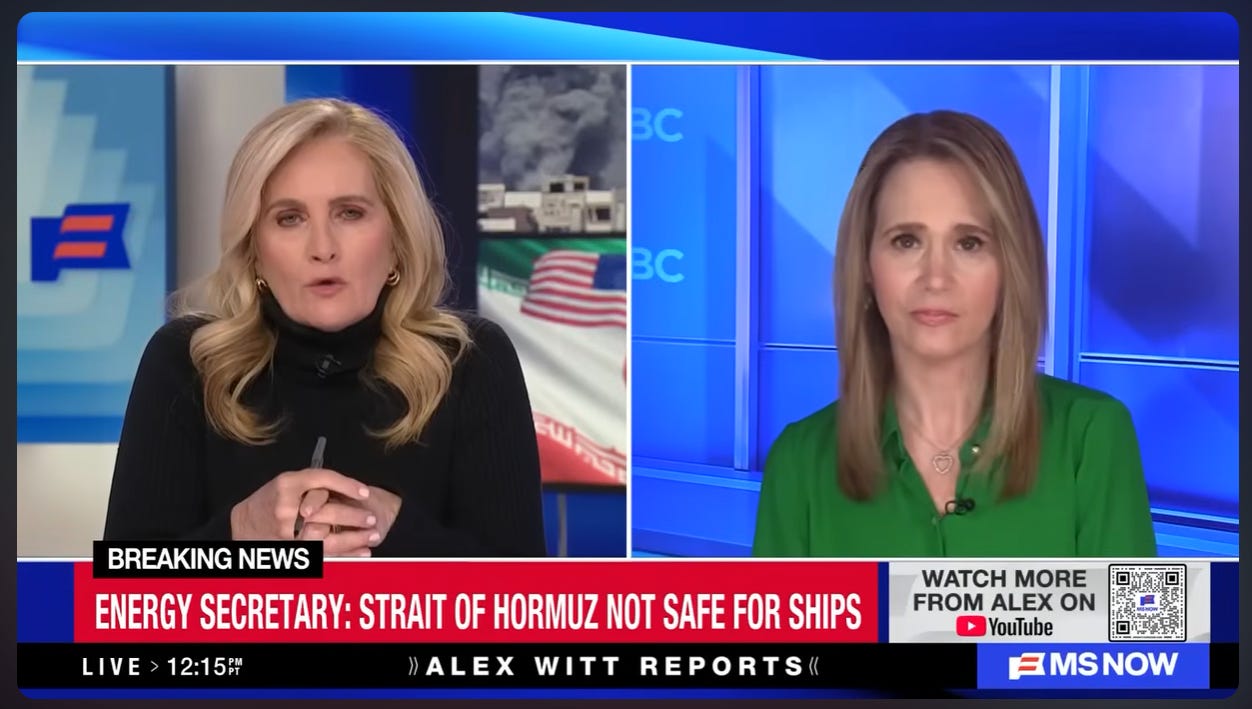
By knowing the number of containers being moved, what’s inside those containers as well as the amount of commodities traversing the waterway superhighway, you can get the real truth of the situation.
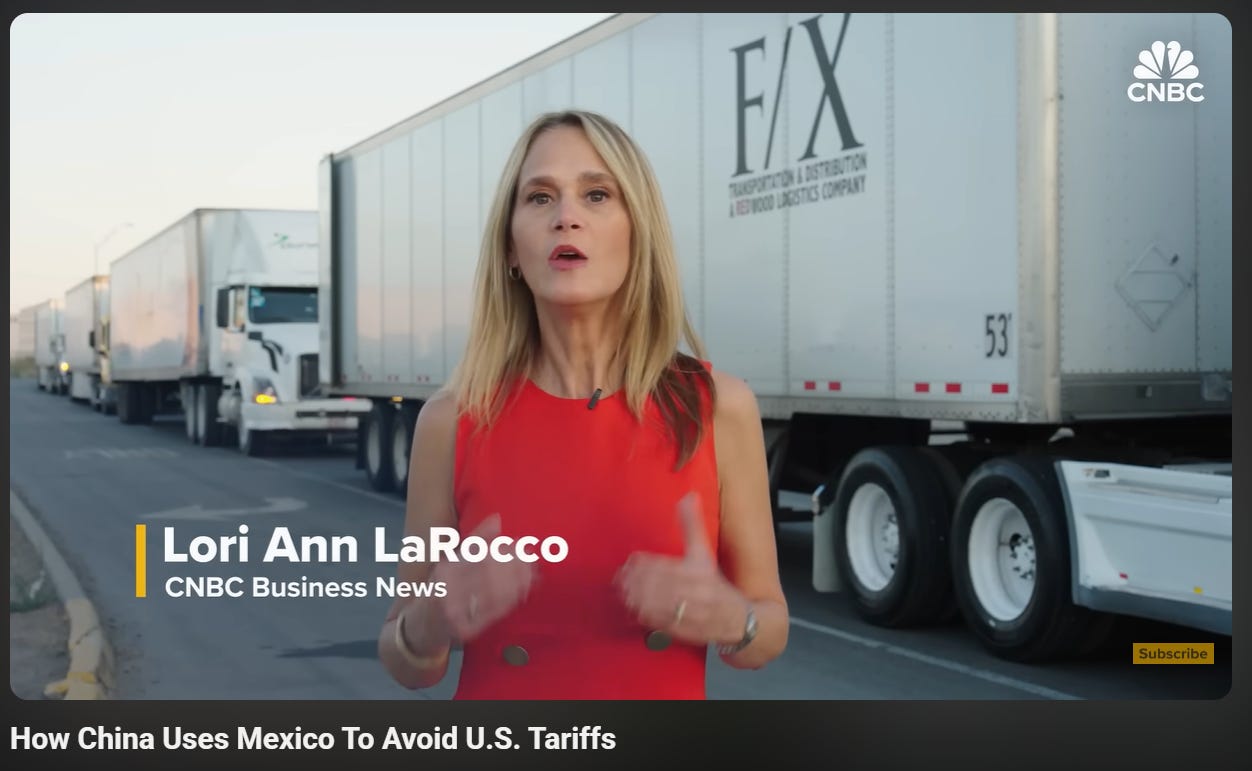
In my television interviews, documentaries, articles, and books, my goal is to make it easier for people to understand how trade and supply chains impact them. I break it down by stripping away the complexity of global logistics and delivering the information into actionable insights.
This is why I have created Trade Alert. A source built for the investor and the consumer who refuses to be misled.
I always explain global trade as a series of pipes. Each pipe depends on the other to make sure trade is fluid.
This network of plumbing is connected by: people, manufacturing, transport by ocean, air, road, and storage.
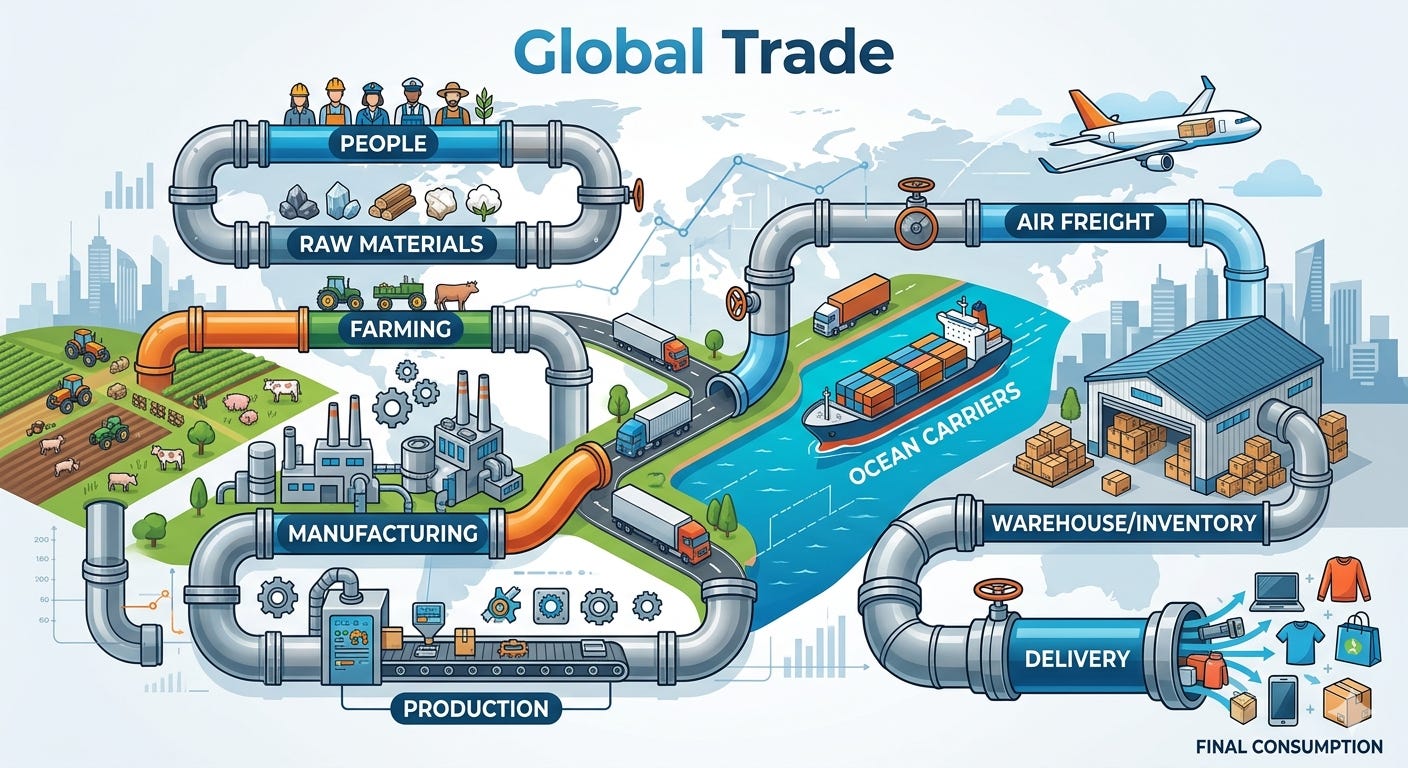
Trade is made by people and consumed by people.
With out people, trade would not move. This is why supply chains crumbled during COVID. There were fewer people available to make or move the product.
All of these pipes are prone to hairballs, which can clog the pipes and create disruption.
Wars, tariff policies, and environmental challenges like droughts lead logistical providers to pivot away to avoid danger or slowdowns. This mitigating creates “elbow joints” in the plumbing of trade.
These elbow joints slow down the delivery of trade and increase the costs. For example, fuel surcharges is a popular charge because the longer transit time eats up more fuel.
Trade impacts all of us. Look around your home and what you are wearing- 90% of everything you own moves via the “Blue Economy.”
These delays aren’t just logistical hurdles—they are surcharges on your life and your portfolio.
Tapping into my business journalist side, I weave into my reporting the investing actionability of trade data.
Trade data provides you with real-time insight into why things are happening and how they can impact you.
Sometimes the impact can be felt in just days, such as gasoline prices if a commodity like oil is impacted. The wallop to your wallet can also be felt several months later when you are buying back-to-school items or holiday gifts for loved ones. The impacts vary, and I break out those timelines.
Trade provides actionable forward-looking information into a company’s supply chain strategy and a country’s economy based on the number of containers and the types of products inside those containers are being moved. Why wait a quarter to hear about their strategy when you can learn about it in real time?
You don’t need to be clairvoyant to see the future. You just need to understand trade.
Subscribe to get:
Real-time tracking of global disruptions.
Actionable insights on how trade wars hit your wallet.
A “no-bluster” look at the physical reality of the global economy.
You don’t need a crystal ball. You just need to follow the trade.
