


The Pinglu Canal project is a man-made canal that is part of China’s international land-sea trade corridor.
The canal connects southwestern China with the Beibu Gulf Port and international shipping routes.
The canal could shift cargo away from barging or rail transport to the Pearl River Delta and effectively bring the coastline hundreds of kilometers inland in logistics terms, according to Lloyd’s List.
Logistics is always looking for new ways to shorten freight transit times. This speeds up manufacturing and delivery. To do this, it needs a vision of what the new tomorrow will look like, and investments in both physical and digital infrastructure need to be made.
Those who control the flow of trade have the ultimate power and make the most money. Yes, trade is agnostic and should flow freely, but the participants in building the waterways, ports, and terminals make money by expanding that trade.
China is a classic example of how a country has used trade infrastructure expansion to build out its own manufacturing base and trade relations.
No matter what part of the maritime industry- tankers, containerships, or bulk vessel owners- the majority say China’s long-game approach to building maritime infrastructure and expanding trade relationships has helped it mitigate the U.S./China trade war and find new markets to sell its goods.
According to the Council on Foreign Relations, China is not only the world’s largest trading country and second-largest economy, but also conducts about 95 percent of its international trade by sea lanes.
This chart shows you China’s overseas footprint.
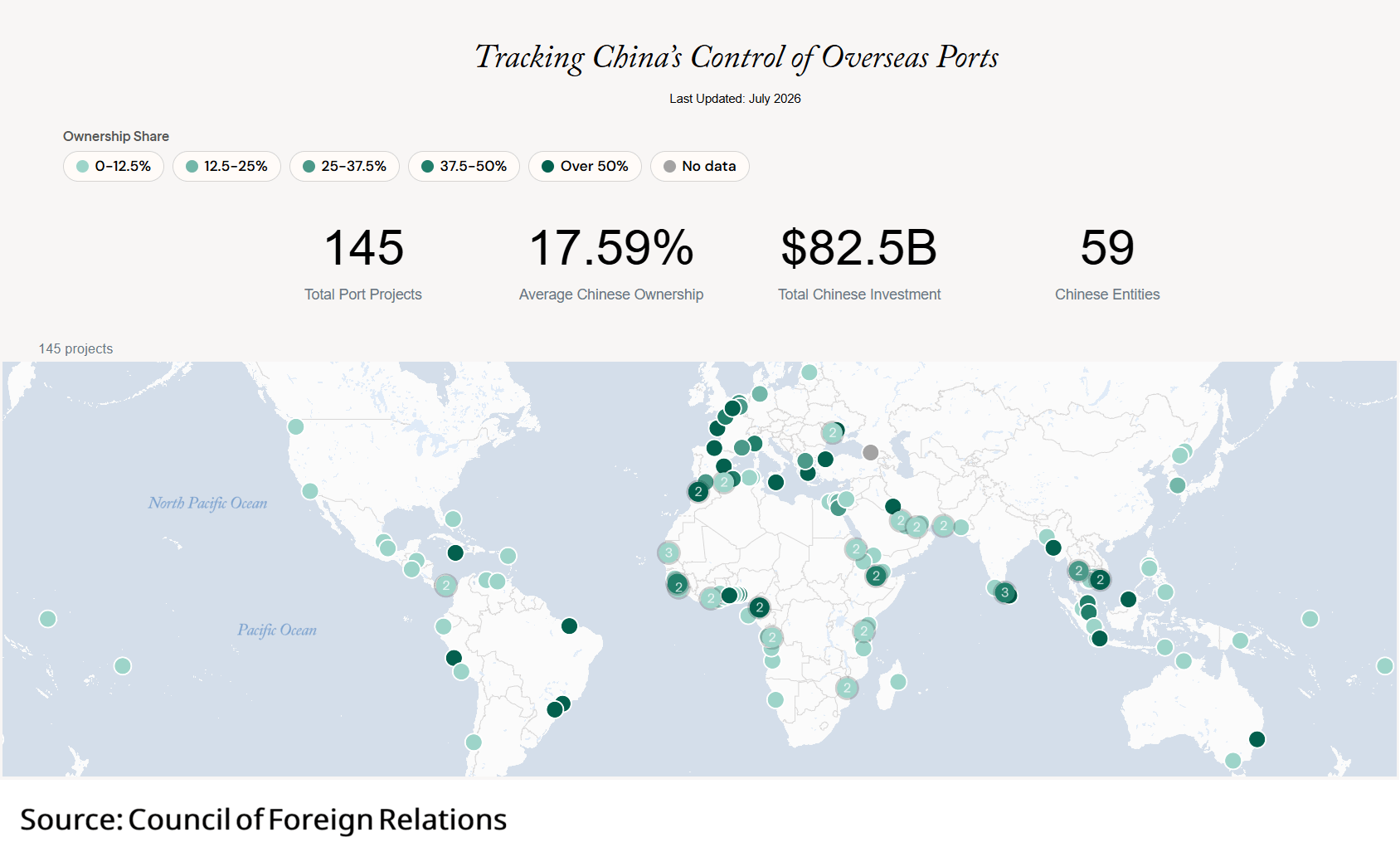
Since the acceleration of the Belt and Road Initiative (BRI) in 2013, China has invested and committed around $1.4 trillion in cumulative infrastructure investments and construction contracts globally. The majority of that money goes to transport, maritime ports, and logistics corridors. China invested $50 billion in Africa’s port and related coastal transport infrastructure alone. Tanker owner-operators call this trade today the “China-to-China” oil trade.
Recently, China’s latest land-sea project, the Pinglu Canal, officially opened to commercial navigation on September 16, 2026. The 134.2-kilometer waterway is a key part of China’s “New International Land-Sea Trade Corridor”.
The canal connects the inland regions such as Chongqing, Chengdu, Guizhou, and Yunnan and offers a more direct maritime gateway to Southeast Asia, rather than routing cargo east through Guangdong.
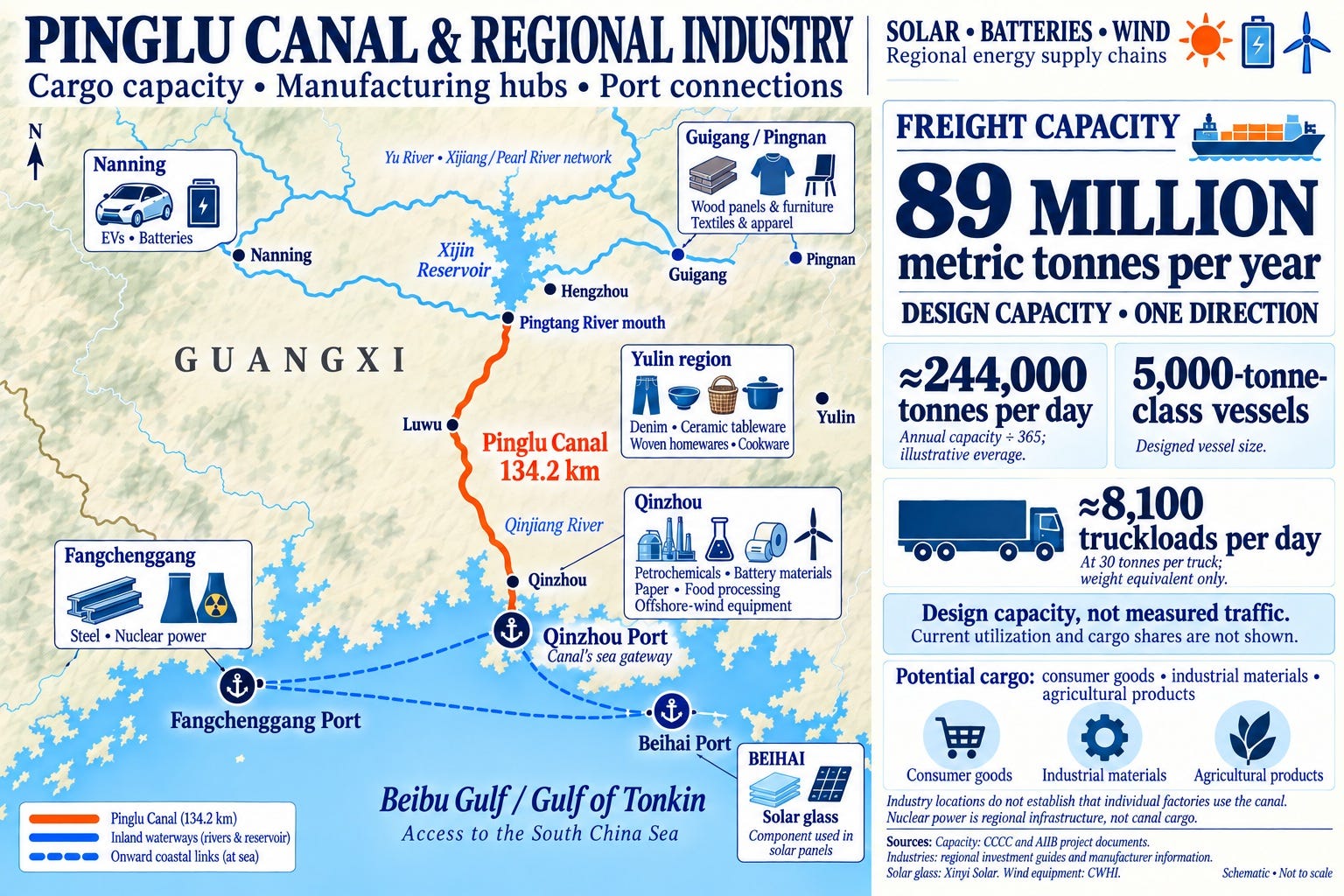
State-backed entities like the Pinglu Canal Group operate and manage the canal, under regional coordination by the Guangxi Zhuang Autonomous Region authorities.
This canal will help China expand its trade, and here’s why.
China built this canal to turn its fragmented logistics network into a continuous corridor. The more nodes you have within a logistics system, the longer it takes for a product to arrive at its final destination. Slow trade = slower manufacturing = delayed payments.
A more continuous system lets trade move more smoothly. For example, experts have said commodities like potassium fertilizer from Laos can reach factories 5 to 7 days faster via the canal than through traditional routes. This benefits companies that use those factories to make their goods.
That potential improvement in transit times is one reason the canal could become an important part of China’s wider supply chain strategy.
The first cargo traversing the canal reflected the bulk-heavy, cost-sensitive freight the canal hopes to move more of.
On the canal’s opening day, Nanning Customs cleared 1,679.8 tons of import and export goods moving via the canal, including auto parts, plywood, thenardite, and fiberboard. Exports included a bulk carrier loaded with Australian bauxite that left Qinzhou Port bound for Nanning Port and Baise Port. A 5,000-ton inland demonstration vessel was carrying limestone and came down the Guigang–Pinglu Canal–Qinzhou route.
The list of freight and the industries that stand to benefit from this new canal is lengthy.
