


“2026 is set for the fastest shoe store sales growth in a decade. That’s in dollars, though, and not in pairs,” Matt Priest, CEO of FDRA.
Cheaper synthetic shoes sold at stores like Walmart and Target face higher tariffs
than leather shoes.
Over half of FDRA survey respondents see no change in the economy over the next 6 months, the 2nd-highest share on record.
Supply-level costs are up 10–12%, according to FDRA.
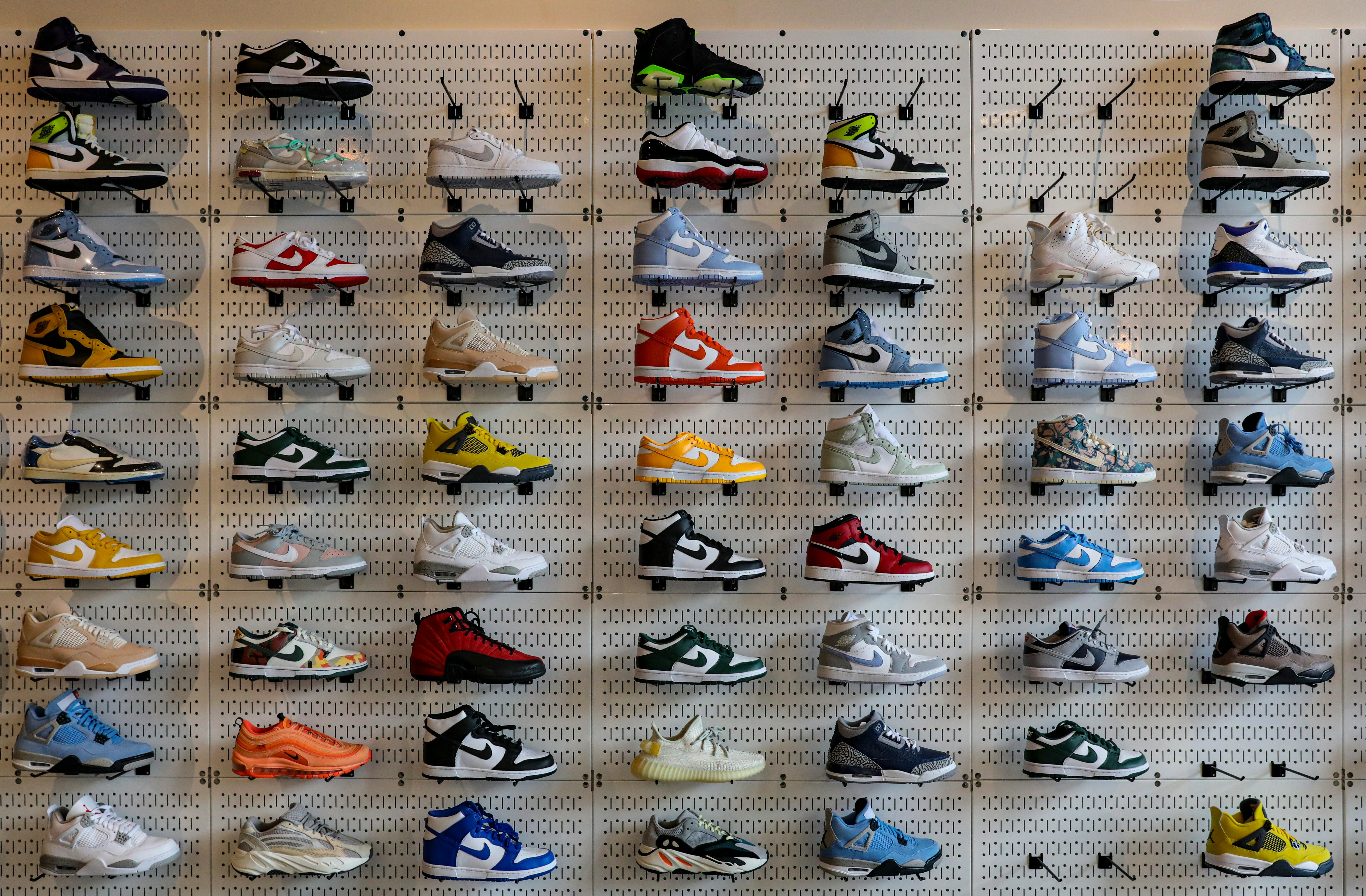
Photo courtesy: Mick Haupt
The price of your shoes is about to go higher.
Footwear retailers and distributors are warning that 2027 prices for goods will increase because of the availability and price of petrochemical raw materials due to the U.S./Israel war with Iran.
Approximately 70% of a synthetic shoe’s materials are petrochemical-based, according to the Footwear Distributors and Retailers of America. About 30% of those costs are tied directly to crude oil prices.
At least 25 shoe components depend on oil. Some examples include synthetic rubber outsoles, nylon uppers, and polyethylene foam sockliners.
“It’s anywhere from a 10 to 12% increase at the supply level, and obviously that will make its way through a multitude of hands,” said Matt Priest, CEO of the FDRA. “It will have a compounding effect, and that’s why there’s concern about it.”
Priest warns footwear companies face margin challenges.
“We also are impacted by the cost in the movement of our products around the world. Many use diesel fuel and bunker fuel, such as trucking, rail, and ships,” said Priest
In a Q3 survey released by FDRA, nearly 3 in 4 members saw operating costs rise from 6 months ago, a 15-quarter high. Looking into the first six months of 2027, over 63% expect operating costs to rise, the highest in 17 quarters.
On sales, Priest hit on something I have been warning about since my days at CNBC. Don’t be swayed by companies touting record sales. Look at the units sold.
“If we look at sales for 2026, we’ve had high prices on our shoes, and because of that, sales are actually going to be strong,” explained Priest. “In fact, 2026 is set for the fastest shoe store sales growth in a decade. That’s in dollars, though, and not in pairs.”
This trend is reflected in comments executives are making on their corporate earnings calls this month.
In Domino’s third-quarter report, same-store sales in the U.S. reported a 0.3% increase, but they were buying fewer items and taking big bites on deals.
Domino’s also saw consumers pull back when gas hit $4 a gallon. This is the same impact convenience store owners saw back in April and was discussed when I sat down with one of the top executives of the National Association of Convenience Stores. Market experts originally thought price destruction would be $5 a gallon. They were off.
“You really see some pressure,” said Joe Jordan, CFO of Domino’s, in an interview.
The company is also getting hit with high diesel prices. Franchisees have paused plans for new locations. As a result? Domino’s trimmed its expectations for U.S. growth this year.
Logistics costs have been a persistent problem across industries. Soaring gasoline prices are impacting customers and diesel prices are inflating trucking costs.
Members of the FDRA were recently surveyed on the impact of higher energy prices and consumer spending.
More than half (52%) of those surveyed are concerned about the shoe shopper weakening over the next six months.
“Discretionary income is zapped when we have higher prices at the fuel pump,” said Priest.
Tracking the Price Increases
Shoe prices will keep rising into 2027 because of the industry’s supply chain.
Shoe orders are placed months in advance for the upcoming season. Raw materials for those shoes are priced when the order is placed. Fall footwear orders for 2027 are happening now.
Companies need to place these orders early to factor in China shutting down for Chinese New Year (February 6, 2027). To prepare for the holiday, Chinese manufacturing winds down several weeks early so workers can travel back home. Then comes the holiday and family time. Essentially, manufacturing in the country is down for a month.
Companies also need to factor in the ocean logistics once the product is completed. Ocean travel time can span 14 to 55 days, depending on the route. Bunker fuel costs paid by ocean carriers and passed on to companies are up due to the war.
Even if the Iran War “immediately ends” after the Midterm election, as President Trump said to reporters before the Republican National Convention in Dallas in September, and that oil would “tumble down below $2 a gallon”, it would not lower the price of products like shoes because manufacturing orders were placed when the raw materials were at higher prices.
“This is why there is a delayed reaction,” said Priest.
Tariffs
The biggest supply chain challenge isn’t just uncertainty in energy prices, but tariffs.
“The price increase this year was tariffs,” explained Priest.
The Liberation Day tariffs, followed by the Section 122 tariffs and the Section 301 tariffs on forced labor, have increased prices this year. Next year, some U.S. companies will not only pay their normal tariffs and the 301 forced labor tariff, but also the looming Section 301 tariff on excessive manufacturing.
All tariffs are layered.
Before any new additional tariffs, Priest explained ordinary sneakers face around a 20% tariff. Average footwear faces an approximate 12% tariff.
Families are taking tariffs on the chin. Some children’s shoes have tariffs near 50% before any additional tariffs are added.
Additional tariffs, like the Liberation Day Tariffs (before the U.S. Supreme Court ruled them illegal), Section 122, or 301 tariffs, have been adding to this year’s price tags.
“Some children’s shoes now face tariffs as high as 70%,” said Priest. “The new (301 on excessive manufacturing) tariff would add an additional 10%, 12.5%, or 20% tariff on goods from 60 nations. The actual (tariff) rate depends on the specific product and its origin. We continue to tell our members to plan for at least a 20% tariff rate based on the historic tariff. It’s a difficult costing environment to be in.”
Vietnam, a beneficiary of China’s 3+1 manufacturing strategy to mitigate tariffs, is a prime target under this 301 excessive manufacturing tariff.
“A pair of sneakers that already had a 20% tariff rate will increase,” said Priest. “This would mean a pair of shoes out of Vietnam or elsewhere would have a 40% tariff on it.”
Tariffs hitting Cheaper Shoes Harder
Priest explained because the tariff structure is based on materials, cheaper shoes face higher tariff rates.
“Shoes that are made of plastic, synthetics, rubber have higher tariffs in our tariff code than a pair of leather loafers from Italy,” said Priest. “So, the consumer that buys these products in this price point is working-class American families. They purchase the shoes in places like Walmart and Target. They are the ones paying these higher duty rates.”
In 2025, Priest said the duty bill for the footwear industry jumped from $3 billion a year to $6.22 billion in 2026.
“The president’s team doubled our tariffs in one year, and that’s going to have a dramatic impact on costing, on pricing, and the movement of goods,” said Priest. “This was all before the conflict with Iran arose, and we have seen a double compounding effect on the cost of goods and inputs that go into production of shoes, because a lot of our components are petroleum-based.”
Priest argues that tariffs are driving up footwear costs while doing little to protect U.S. shoe production because almost all footwear sold in the U.S. is imported.
“It’s a product the president himself last year said he’s not looking to produce here in the United States.”