


U.S. trade balance hits 17-month high despite Trump tariffs
Expect more tariff threats by President Trump
AI, data centers fueling deficits with Taiwan
Buckle up for more trade war rhetoric.
U.S. President Donald Trump doesn’t like negative press, and headlines about the August trade deficit will surely fuel more political bluster and Trump tariff threats this week. Chest-thumping is a way to change the narrative.
But first, some context behind the August numbers: the overall goods and services deficit was $105.6 billion. That was up $12.7 billion from $92.8 billion in July. But when you look at the year-to-date deficit from the same timeframe in 2025, the deficit was down $138.2 billion, or 19.9 percent.
This latest data set arrives at a critical moment for U.S. companies navigating tariffs, supply-chain uncertainty, and shifting import patterns. The next 301 tariff on structural excess industrial capacity and manufacturing overproduction is expected in the coming weeks.
The countries most exposed to this next tranche of tariffs are countries with the largest trade deficits with the United States.
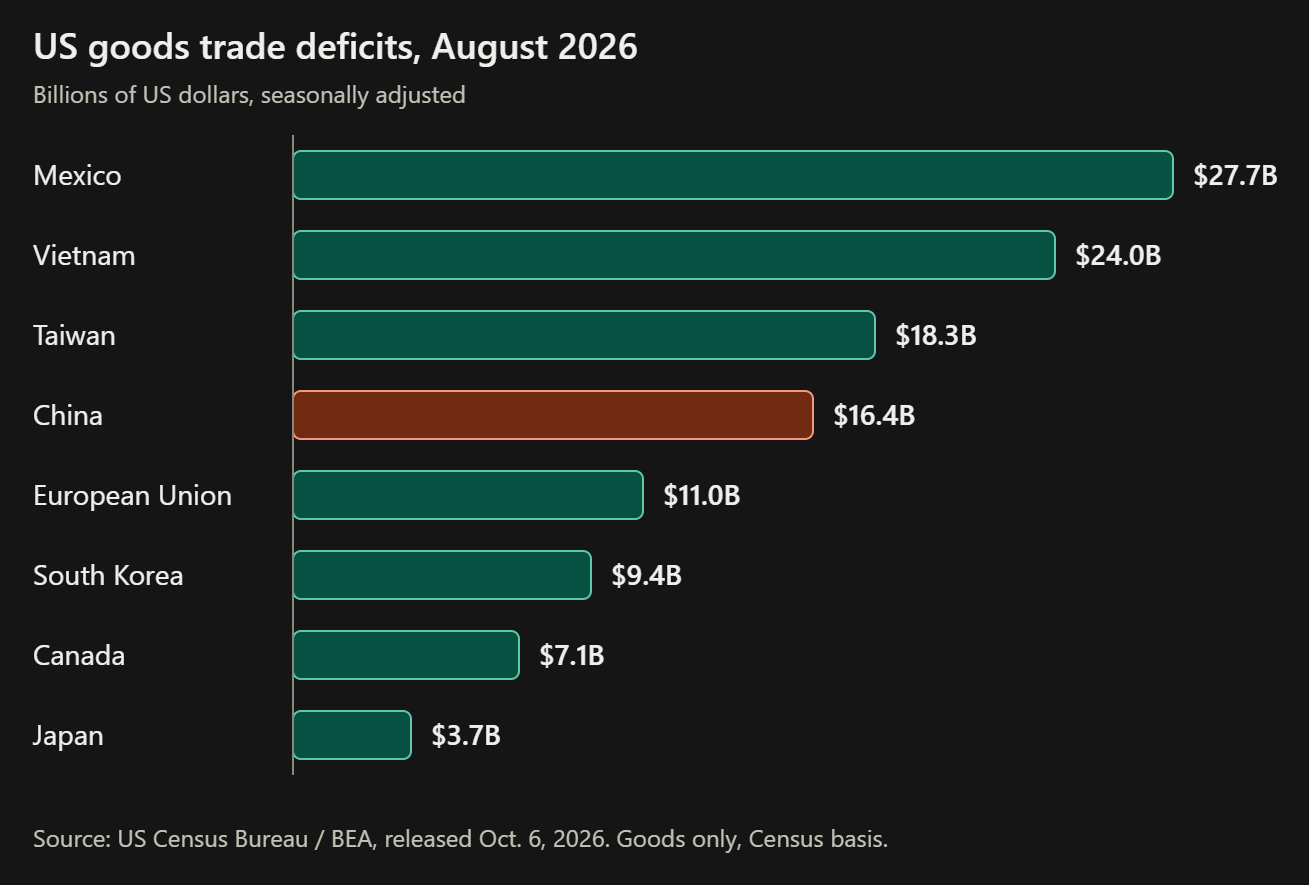
Mexico had the largest U.S. goods deficit ($27.7B), followed by Vietnam ($24.0B), Taiwan ($18.3B), and China ($16.4B).
What’s Fueling the Deficit
The U.S. deficit with each country depends on what it trades with us. Their products are in high demand by both U.S. consumers and businesses.
This can be tracked by the trading partners’ goods surpluses with the United States. In August 2026, the EU ($11.0B), Japan ($3.7B), and Korea ($9.4B) ran surpluses driven by concentrated exports of autos, machinery, chemicals, and steel.
Given the surge in AI and data centers, it’s no surprise that Taiwan ran a trade surplus with the U.S., driven by exports of AI servers. Mexico is the top U.S. import source with deep auto and electronics integration.
China sliding down to fourth behind Vietnam and Taiwan ties into the China plus 1 trade expansion into Southeast Asian suppliers to sidestep tariffs.
Canada is absent from this 301, but it has its own trade war going with the U.S.
Yes, United States Trade Representative (USTR) Jamieson Greer has said that affected economies may be able to negotiate with the U.S., but you know President Trump will surely voice his displeasure.
Tariff Threats and Effectiveness
We’ve seen many threats since Trump’s second term in office.
Who can forget China’s ever-changing tariff rates and the 200% tariff on European wine, champagne, and spirits in March 2025?
China tariffs did go down, and the 200% tariff was never imposed after the EU postponed its American whiskey tariff.
Remember the pasta tariff threat?
Nonetheless, it would not be a surprise to hear more “Made in America” rhetoric as we head to the Midterms, as well as tariff threats. The latest trade deficit adds another political talking point because the deficit is widening even as tariffs remain central to the administration’s trade policy.
Blasting Through the Trade Bluster
Investors will also need to be wary of any “deal” announcements.
Case in point: India. Here’s the bluster timeline:
It all goes back to February 2, 206 when President Trump posted on Truth Social
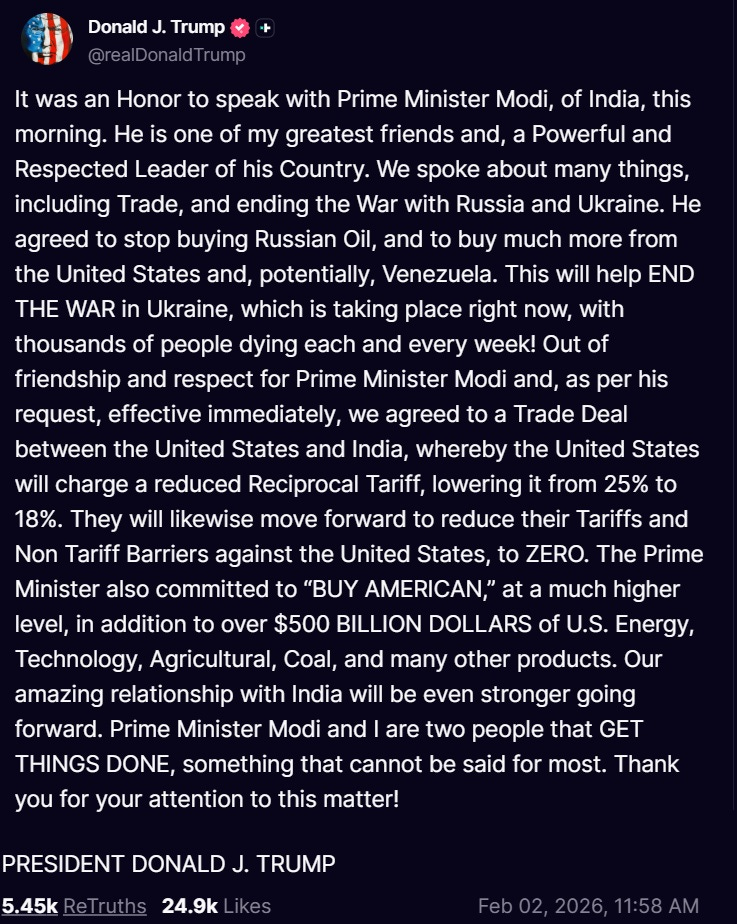
So has India made good on this deal? The short answer: no.
Eight months after Trump's February 2 post, India has delivered almost none of what Trump said India agreed to. Partly because the deal itself still isn't signed.
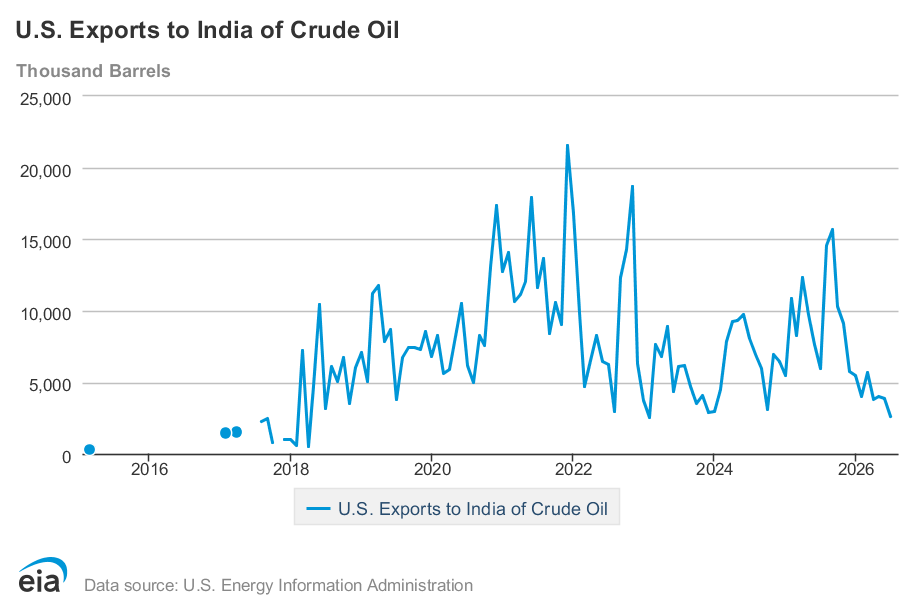
The promise to stop buying Russian oil: nope.
Imports actually went the other way for much of the year. Russia’s share of India’s crude intake hit a record 43.25% in April-July 2026, peaking at 2.82 million bpd in July.
The Strait of Hormuz disruption due to the U.S./Israel war on Iran has turned India to buying more Russian crude. Imports were lower, according to Kpler, in September, but Russia is exporting less due to Ukraine attacking critical oil refineries and infrastructure.
Even so, Russia remains India’s biggest single crude supplier.
Want to know how much U.S. crude India is buying? Here’s U.S. government data:
Other deal promises: Cut tariffs and non-tariff barriers to zero: not in effect.
The February joint statement committed India to eliminate or reduce tariffs on all U.S. industrial goods and a wide range of U.S. food and agricultural products.
But India’s Union Minister of Commerce, Piyush Goyal, said at the time India’s tariff cuts on U.S. exports would take effect only after a formal agreement was signed, and that hasn’t happened.
The official joint statement was also watered down to “eliminate or reduce,” and it excludes some sensitive agricultural lines.
Fast forward to this Fall:
India’s Commerce and Industry Minister Piyush Goyal told the press on September 25 that the U.S. deal “is almost done and dusted.”
October 2, USTR Greet responded that the deal isn’t coming soon.
Then, on Oct. 5, India’s finance minister declared talks have “hit a plateau”.
Blasting through the Bluster
This negotiation on the political stage does not amount to real action. The bluster has only created more uncertainty. The appearance of moving forward is masking the reality of the situation.
Companies are still importing; Americans still want their products. The United States manufacturing base is growing, but not at the rate the political rhetoric suggests.
This latest trade dataset shows that tariffs are not a cure for America’s trade deficit. It only amplifies what the U.S. relies on for manufacturing and consumer consumption.
Expect more hardline talk from the White House to change the narrative.