

AI is now a GDP driver. A July 2026 Federal Reserve working paper found that direct business investment in the AI buildout accounts for about one-fifth of U.S. GDP growth. Brookings puts AI-related investment at 2.3% to 8.2% of GDP.
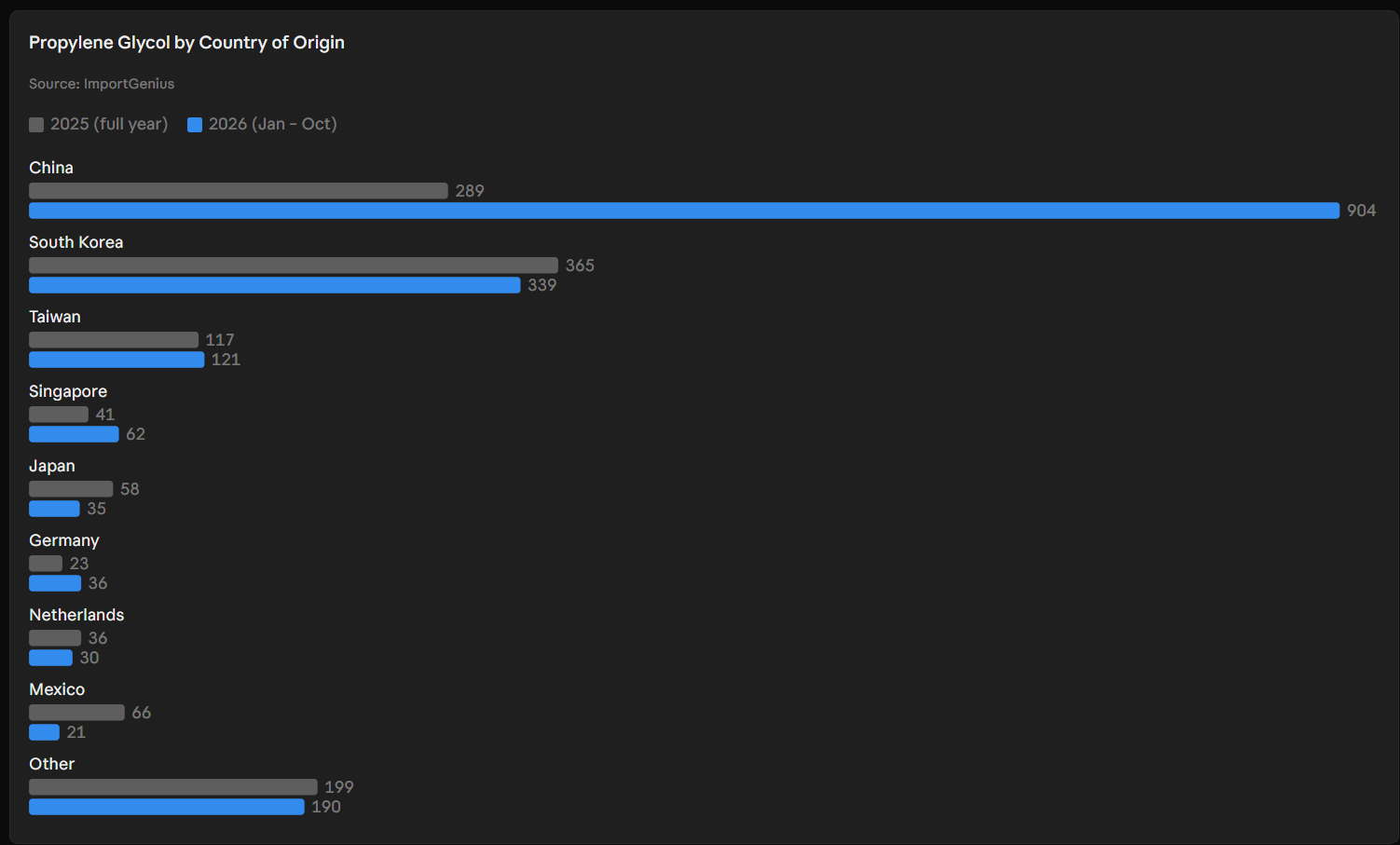
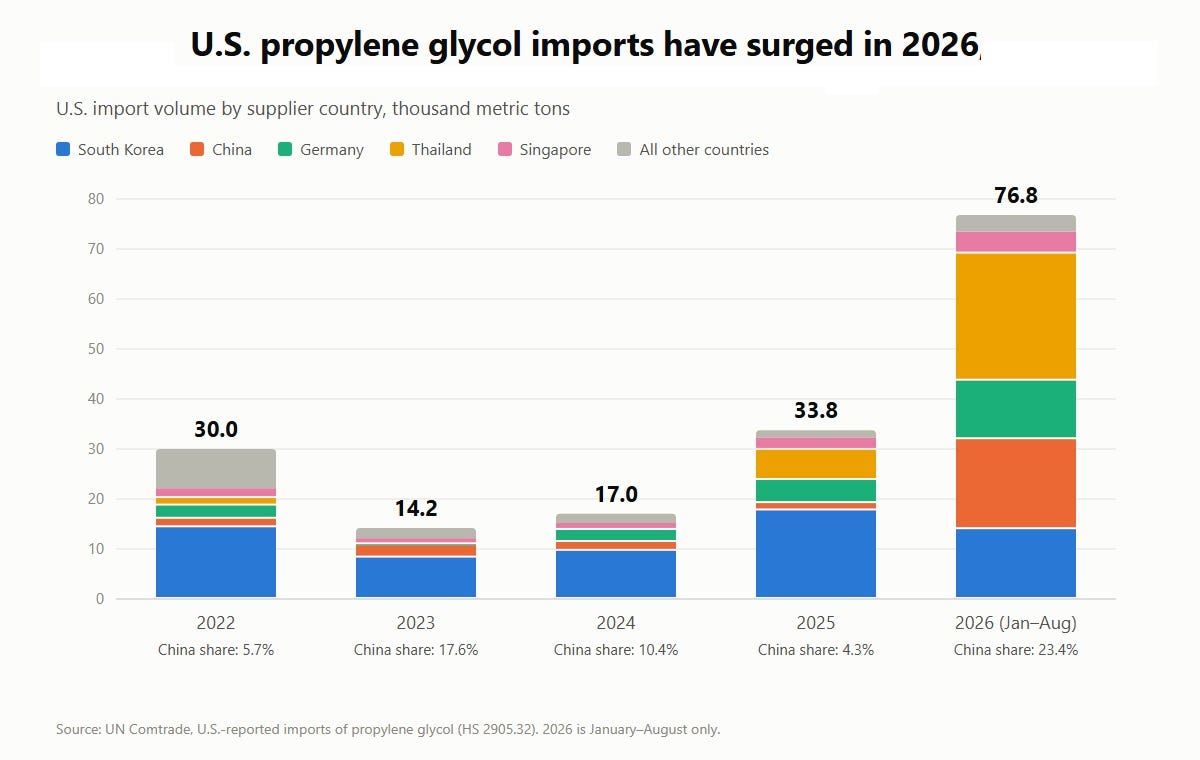
Coolant imports are surging. U.S. imports of propylene glycol, the coolant used in data center liquid cooling, hit 76,800 metric tons from January through August 2026, more than double all of 2025, according to UN Comtrade data. China’s share jumped from 4% to 23%.
Freight will follow the friendliest states. With Texas weighing a moratorium, hyperscalers may move to North Dakota, Indiana, Louisiana, Oklahoma, and Arizona. This shift means more trucking, rail, and warehousing.
We have seen firsthand how federal policy shapes trade, logistics, and supply chains. The Trump trade wars with China and the world are the most recent examples.
Government policy creates winners and losers. The support or challenges these policies create can translate into supply chain growth or a pullback. That is why lobbying organizations actively try to influence White House policy and Congressional regulatory oversight.
Data center policy is front and center after the Democrats’ huge win in this midterm election. Markets and news headlines focus on the policy impact on the hyperscalers (Amazon Web Services, Microsoft Azure, Google Cloud Platform, Meta Platforms, Oracle Cloud Infrastructure) and others, but it will also impact the supply chain and logistics sector.
Why? Because these industry segments are essential to building and moving the freight used to create and maintain these data centers.
Future federal and state legislation can either thwart or encourage expansion. While the Trump Administration favors AI dominance, state governments ultimately control access to build out data center infrastructure.
The US dominates global data center infrastructure, housing 15 of the top 20 hyperscale data center markets in the world according to Cushman & Wakefield.
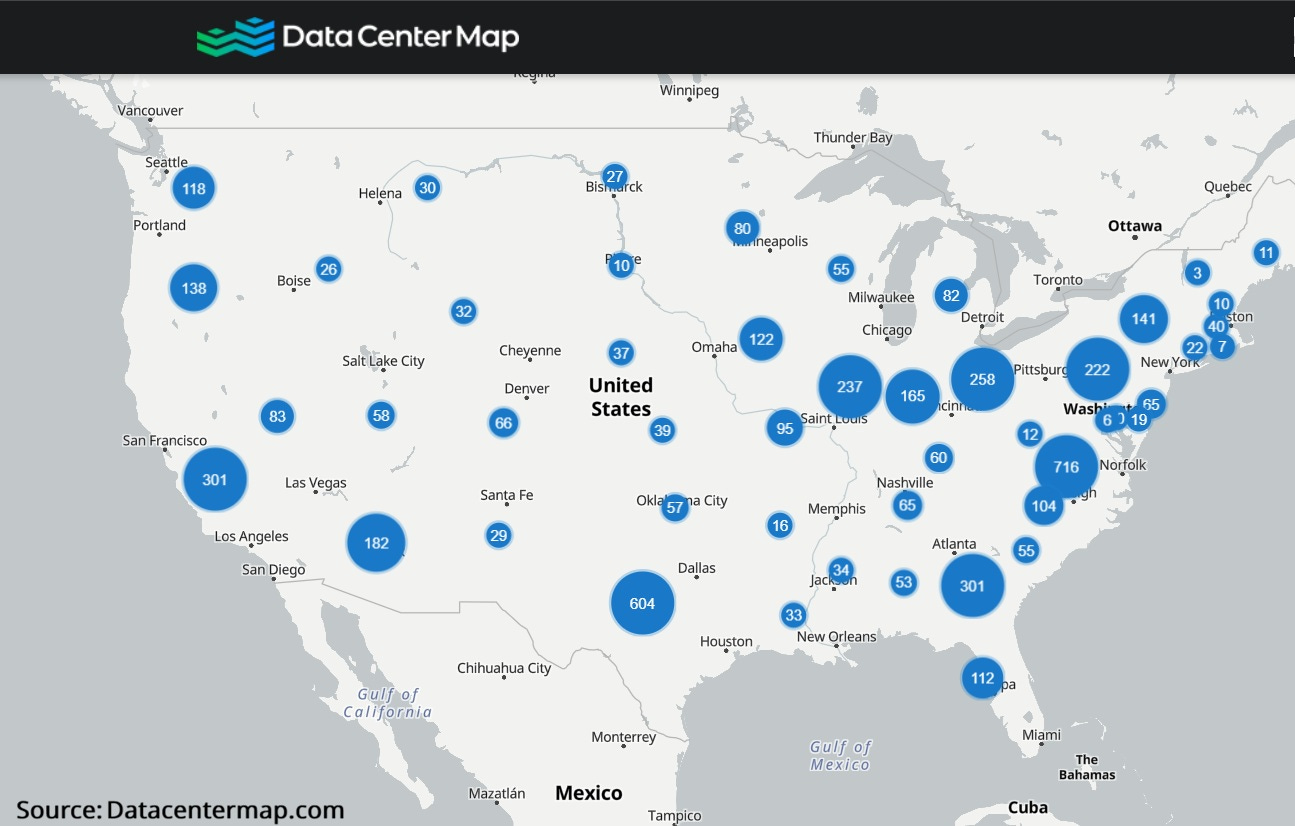
This influx of AI/data center components into the United States has been a boom for the logistics sector and supply chain.
This freight has lined the pockets of manufacturers, air carriers, ocean carriers, railroads, trucking companies, and warehouse operators.
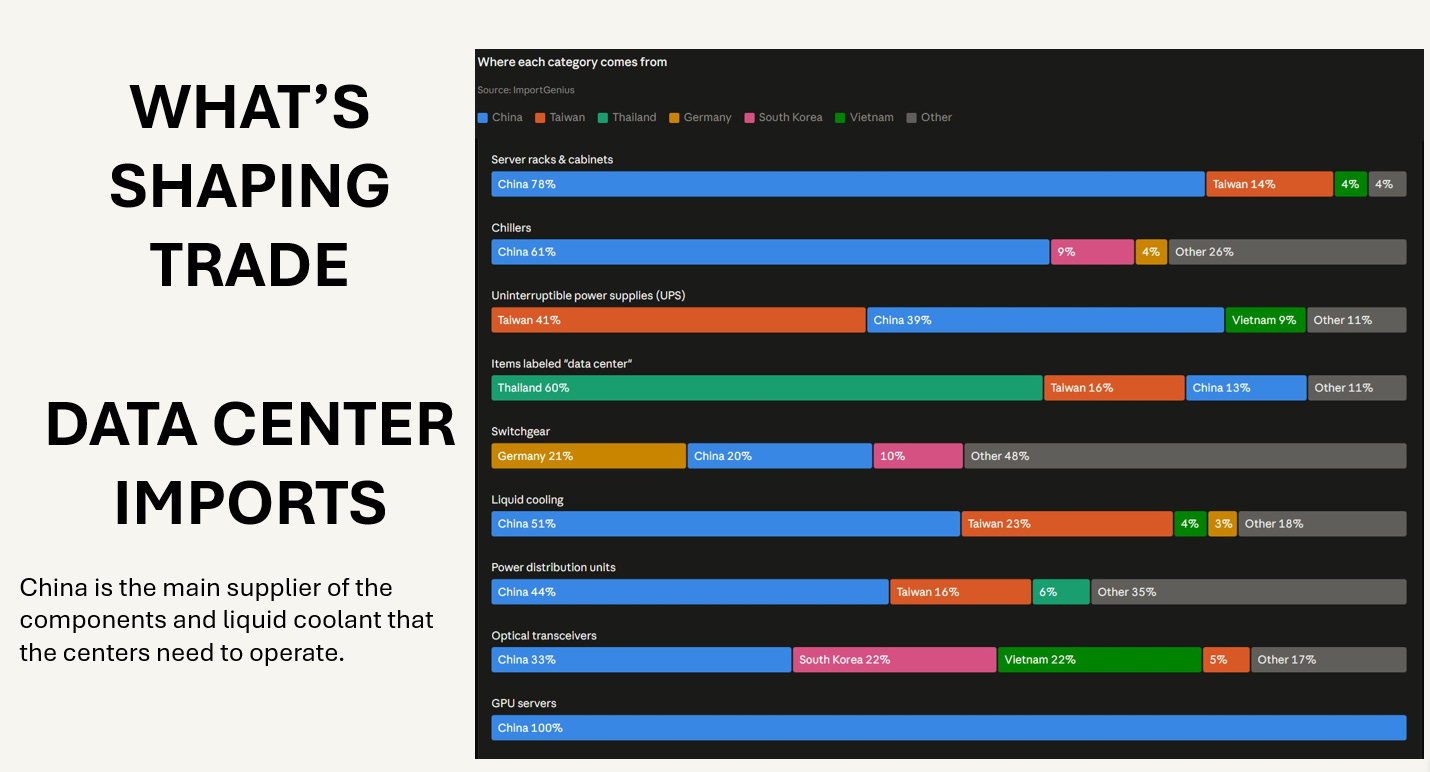
But the parts are only the supporting characters in this story.
Data Center Maintenance
Once these centers are up and running, they need maintenance and key components to keep functioning.
Demand for propylene glycol, a petroleum-derived coolant used in data center liquid cooling, is also up amid this historic buildout. The U.S. relies on China for that chemical. U.S. propylene glycol imports hit 76,800 metric tons in January–August 2026, according to UN Comtrade data.
But the war with Iran is impacting the manufacturing and delivery of that chemical due to the U.S./Israel war on Iran, but that’s a story I have before.
Here’s the latest chart on imports of propylene glycol imports.
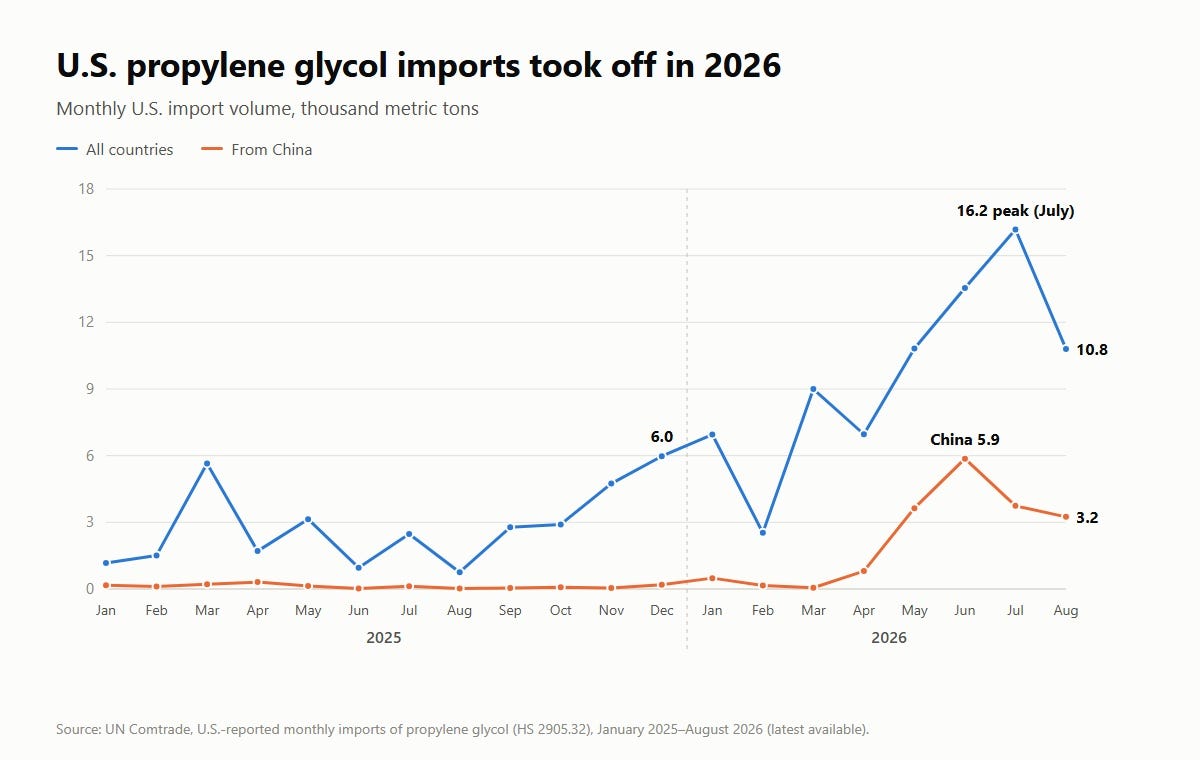
The project expansion can be seen in this surge for the product needed to keep the centers running safely.
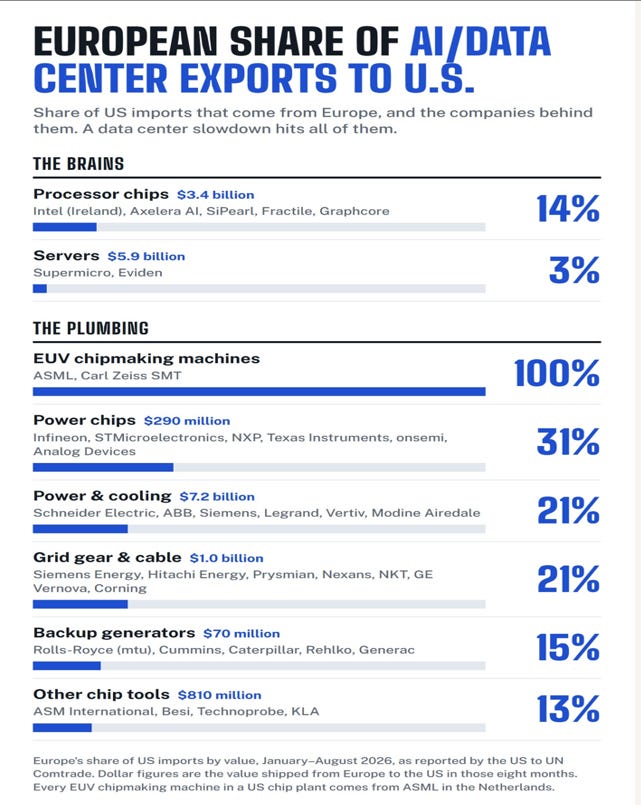
Another factor supporting the AI boom: foreign-manufactured components.
We hear a lot about Asia for the chips and servers. Europe is the plumbing for America’s AI buildout. Without vital manufacturing equipment, specialized power management, and advanced packaging technologies, companies like NVIDIA could not manufacture AI chips.
European players are highly concentrated in advanced power semiconductors for data centers, and there is a rapidly expanding frontier of custom AI silicon startups. Between 30 and 100% of the key plumbing for AI/ Data Centers comes from Europe.
The tremendous data center infrastructure investment is also boosting U.S. GDP.
“Data centers are going to be around as long as we are consuming data at the rates that we are consuming data,” said William Netzinger, regional business development director and global energy & capital projects for UTC Overseas, Inc. “There’s not enough infrastructure to support what we want.”
AI-related investment currently accounts for between 2.3% and 8.2% of total U.S. GDP, according to Brookings. A July 2026 Federal Reserve working paper concluded that direct business investment in the AI buildout accounts for roughly 20% (one-fifth) of overall U.S. GDP growth.
This is why state moratoriums on data centers and tariff policies are key swing factors not only for data infrastructure but for the U.S. economy as well.
One state being watched closely is Texas, which has surpassed Northern Virginia as the world’s largest data center market. Research firms say Texas accounts for 25% to 30% of the data center capacity expected to come online by 2030.
Governor-elect Gina Hinojosa has stated she wants a temporary moratorium on new data center approvals until the new state legislature meets in January 2027 to enact binding safeguards.
In an interview with CNN, Hinojosa clarified that she is not fundamentally opposed to the industry: “It is not that I hate data centers. I hate the way they are taking advantage of Texas, and that stops when I’m governor.”
In addition to Texas, Georgia and Ohio have pledged to reshape state regulations and policies to stop or slow the buildout.
This backlash didn’t come out of nowhere.
The CSIS Energy Security and Climate Change Program commissioned Redpoint Advisors to study how public sentiment toward data centers has changed over the past eighteen months. In November 2024, 83% of social media comments focused on excitement and anticipation about what was to come. Fast forward to May 2026, and that 83% of wonder had been replaced with anger. The two main complaints were air and other pollution (46%) and increased energy costs (29%).
As of now, more than 145 data center projects in the U.S. were delayed or canceled nationwide through early August due to public backlash, according to S&P Global figures and the Washington Post.
Tech hyperscalers now face shrinking location options, with 45 communities voting to restrict data centers this election cycle.
Data Center Backlash
We will get a glimpse into the divisions over data centers when the Bipartisan American Affordability and Jobs Act comes up for a critical procedural vote today.
The bill requires data centers of 20 megawatts or larger to fully fund their own grid infrastructure upgrades so they don’t pass those power-delivery costs on to everyday utility ratepayers. Rising energy costs are a bipartisan concern.
The bill also includes expedited approvals for new power plants and transmission lines. But environmental and tribal groups oppose the bill. They say the legislation weakens environmental reviews and undermines tribal sovereignty.
Infrastructure like trade follows the path of least resistance. That means away from bureaucratic red tape and regulation.
Hyperscalers will need to pivot to data center-friendly states: North Dakota, Indiana, Louisiana, Oklahoma, and Arizona. This shift will influence where freight is repositioned and stored. Trucking and rail will benefit by moving freight to these new locations. Warehousing will also be important for storage.
To understand the ripple effects these policies can have, it’s important to recognize the data center supply chain. The impact expands well beyond the Magnificent Seven.
The grid bill you mention worries me more than the moratoriums. A moratorium moves a project to another state. Making data centers pay for their own grid upgrades raises the cost everywhere. And the big five already spend about 116% of their operating cash flow on capex, so that extra cost gets borrowed.
Great angle on the supply chain side. The propylene glycol import surge was new to me. I've been following the same story from the investing side, looking at which data center suppliers the selloff may have mispriced. Seems like we share a lot of interests, so I'd love to connect. Here's my piece if it's useful: https://mpehota.substack.com/p/data-centers-wont-stop-theyll-just